
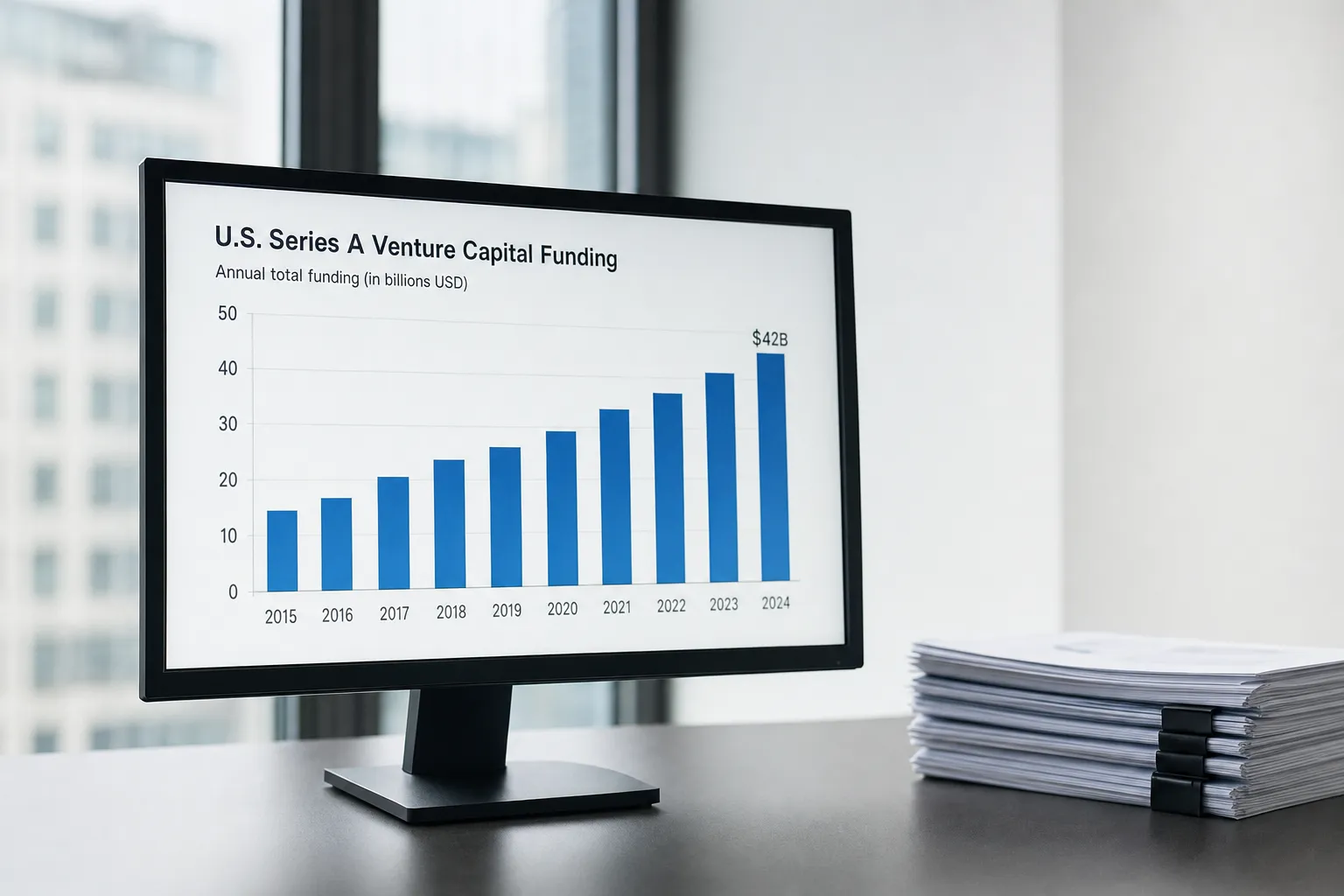
U.S. Series A funding is experiencing unprecedented capital concentration. Through October 2026, companies raised $42 billion at that stage—a stunning 60% increase year-over-year—yet deal counts have remained flat, according to Crunchbase data. This paradox reveals a harsh reality: venture capital is flowing faster than ever, but fewer startups are making the cut. The median Series A round has expanded, meaning available capital is divided among fewer winners. In prior years, distributed funding encouraged a broader ecosystem of competing startups; now institutional investors are concentrating bets on proven winners. This shift marks a fundamental change from venture's traditional role as a democratizing force in tech startup funding.
The tightening reflects sharply elevated evaluation standards. Founders can no longer rely on model access or inflated valuations to attract Series A capital. Investors increasingly demand durable revenue, full-price customer renewals, and defensible unit economics. Ilman Shazhaev, founder and CEO of AI startup Diz, argues that margins after delivery costs—not gross margins—should determine fitness. General Catalyst, which led numerous October funding rounds, exemplifies this shift: the firm backs only startups with embedded customer workflows and clear competitive moats. Venture investors are essentially repricing AI from model-access stories to delivery-and-retention ones. Founders with revenue cohorts and healthy gross margins above 70% in leading AI software rounds are oversubscribed; everyone else faces rejection.
Capital concentration is particularly visible in emerging verticals. Defense-tech startup Shield AI raised $2 billion recently, attracting mega-round capital by demonstrating defensibility in autonomy and virtual simulations where model quality must be proprietary and embedded. Drone-delivery provider Zipline International attracted substantial Series-stage capital by proving repeated customer value and unit economics across multiple geographic markets. AI chip startups are emerging as another focal point, with investors backing teams developing superior inference hardware as model access commoditizes. These verticals—defense autonomy, logistics automation, and semiconductor design—share one trait: embedded, hard-to-replicate customer value.
The two-tier funding market now penalizes the middle. Exceptional founders with revenue-proven models and defensible workflows remain oversubscribed; everyone else faces prolonged fundraising winters. Paradoxically, total Series A capital reached record highs even as opportunity narrowed, proving consolidation is winning. This dynamic will reshape the startup ecosystem, favoring teams demonstrating both immediate revenue and long-term defensibility over those chasing model superiority alone.