
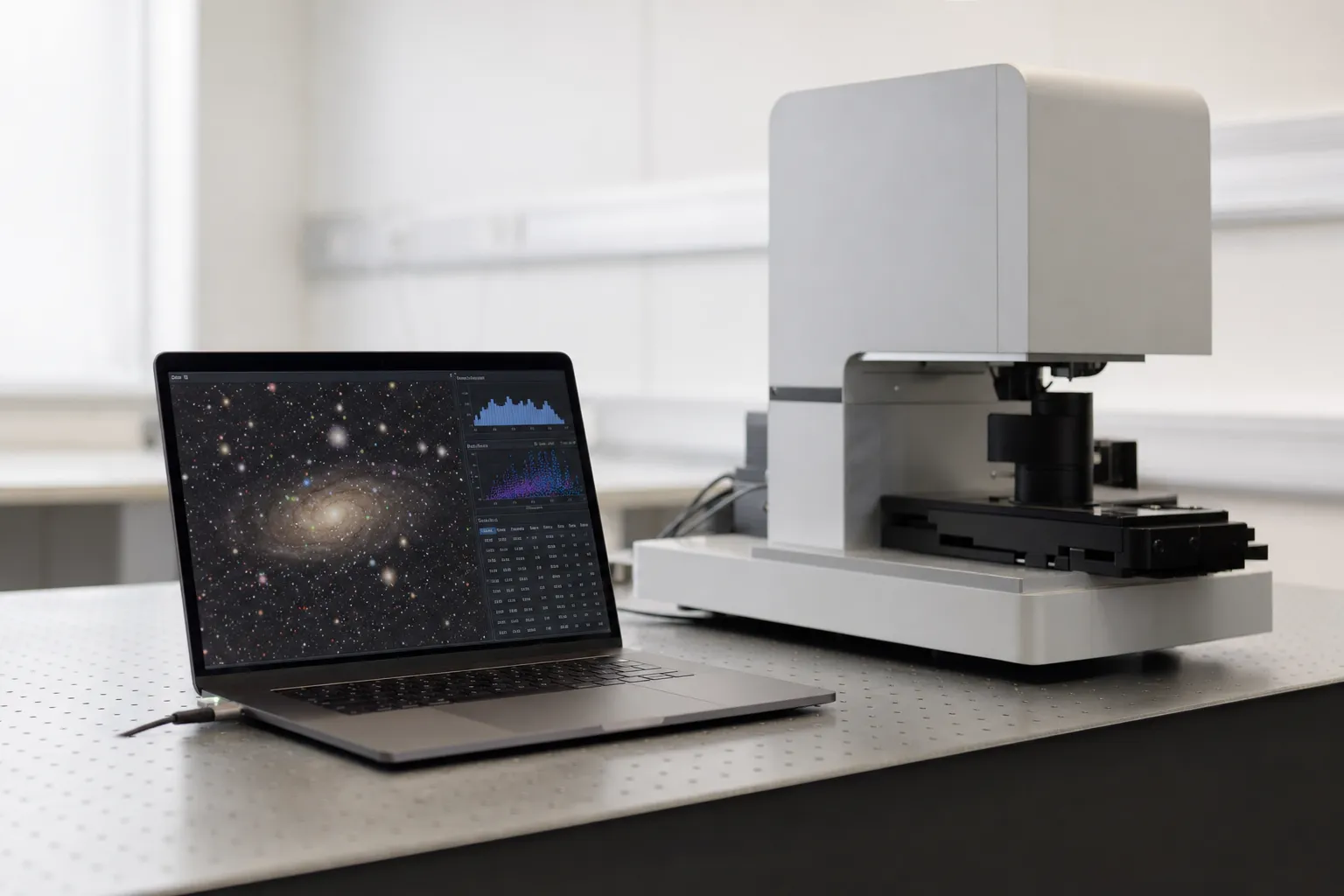
A high school student has made a significant astronomical discovery using artificial intelligence, uncovering 1.5 million previously invisible cosmic phenomena. The achievement marks a striking example of how accessible machine learning tools are enabling students and researchers to make contributions traditionally reserved for professional scientists with advanced equipment. The discovery wasn't dependent on having access to the world's largest telescopes or institutional resources, but rather on applying AI analysis techniques to existing astronomical data. This breakthrough suggests that the bottleneck in scientific discovery may no longer be data collection but rather our ability to analyze and interpret the information already available to us.
The discovery reflects broader trends in AI-assisted scientific research. Universities like Helsinki are increasingly deploying AI to help researchers across disciplines make breakthroughs, whether in astronomy, medicine, or materials science. Large language models and specialized neural networks can now process, pattern-match, and extract insights from datasets that would take human researchers years to analyze manually. This democratization of AI tools means that geographic location, institutional affiliation, and resources matter less than they once did. A determined student with a laptop and access to public datasets can potentially rival the output of well-funded research teams, fundamentally changing who gets to participate in cutting-edge science.
The implications extend beyond astronomy. As AI tools become more sophisticated—from language processing to document extraction to on-device speech synthesis—they're enabling new workflows across research communities. The combination of improved accessibility and capability suggests we may be entering an era where AI-human collaboration becomes the norm in scientific research. This shift could accelerate the pace of discovery across fields, but also raises questions about how scientific credit is attributed and how institutions should adapt their processes to leverage AI most effectively. The cosmic phenomena discovery serves as a proof point that these tools are already reshaping what's possible for researchers at every level.