
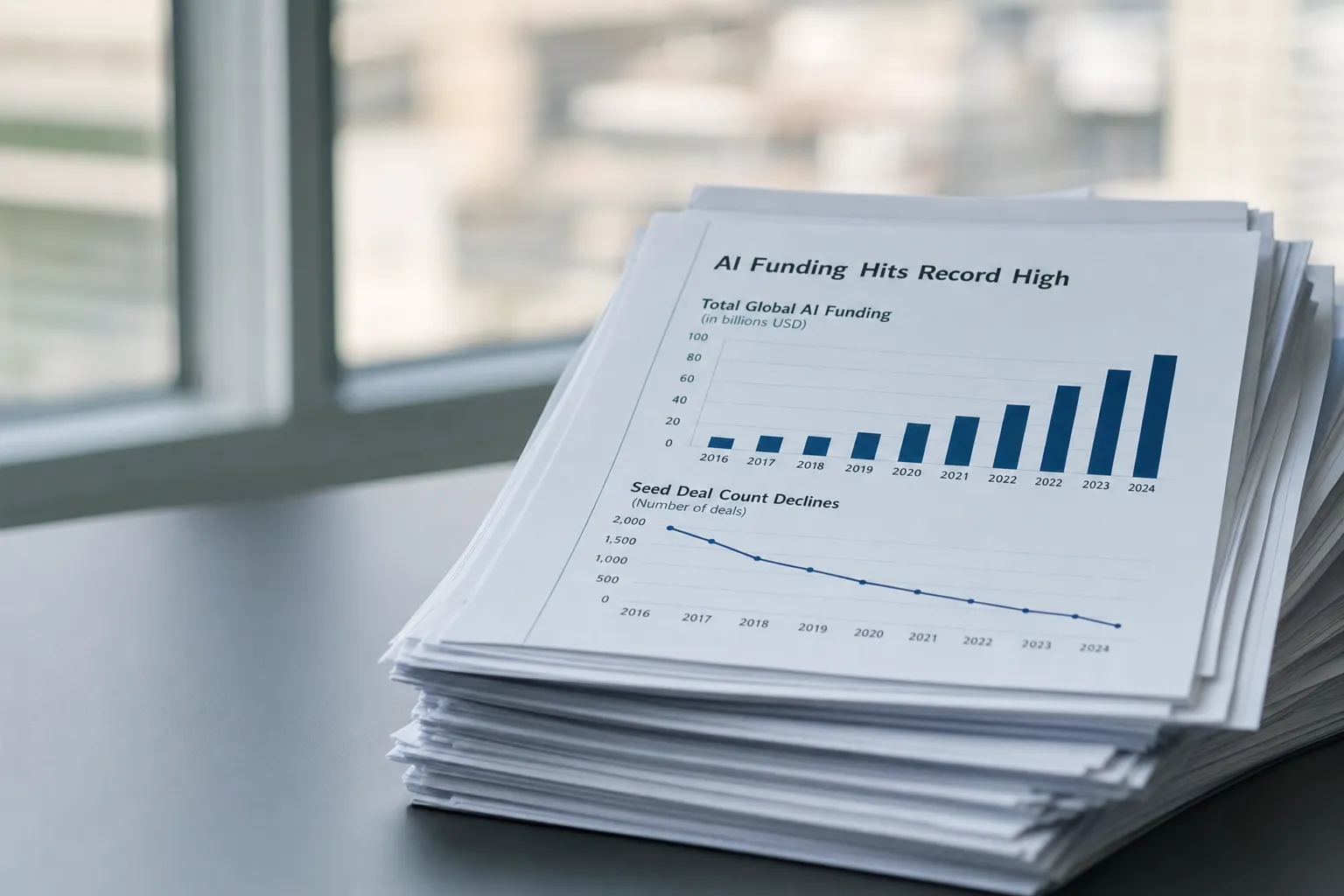
Venture capital has reached historic levels in 2026, with global funding hitting $59 billion in October alone—a 45 percent year-over-year jump fueled largely by China's DeepSeek securing a record-breaking $15.9 billion round. Yet these headline figures obscure a stark reality: the funding boom is almost entirely concentrated in massive AI rounds rather than distributed across the broader startup ecosystem. Seed- and early-stage deal counts have declined significantly even as total dollars deployed have climbed, creating a bifurcated market where mega-rounds dominate while emerging companies struggle to raise capital.
The concentration has reached unprecedented extremes, with data showing that more than half of all seed through growth-stage venture capital raised in the U.S. this year—exceeding $260 billion—has gone to just seven companies founded or led by men who are already billionaires. This represents a fundamental shift from venture capital's historical mandate to identify early-stage talent and democratize opportunity. The trend suggests that as AI becomes increasingly capital-intensive, traditional venture models are breaking down, with investors gravitating toward proven founders with existing resources and networks rather than backing novel ideas from first-time entrepreneurs.
These dynamics are reshaping the industry's infrastructure itself. Sequoia Capital, the iconic firm that helped define venture expansion over two decades, is consolidating back toward its Bay Area roots, shutting down offices and programs built during its 20-year international expansion while announcing $10 billion in new funds. Meanwhile, layoffs continued across the broader tech sector, with over 127,000 workers cut in 2025 alone. Together, these developments signal that the AI funding boom is creating winners and losers at an accelerating pace—with capital flowing to elite founders while mid-market startups and geographic diversity suffer.