
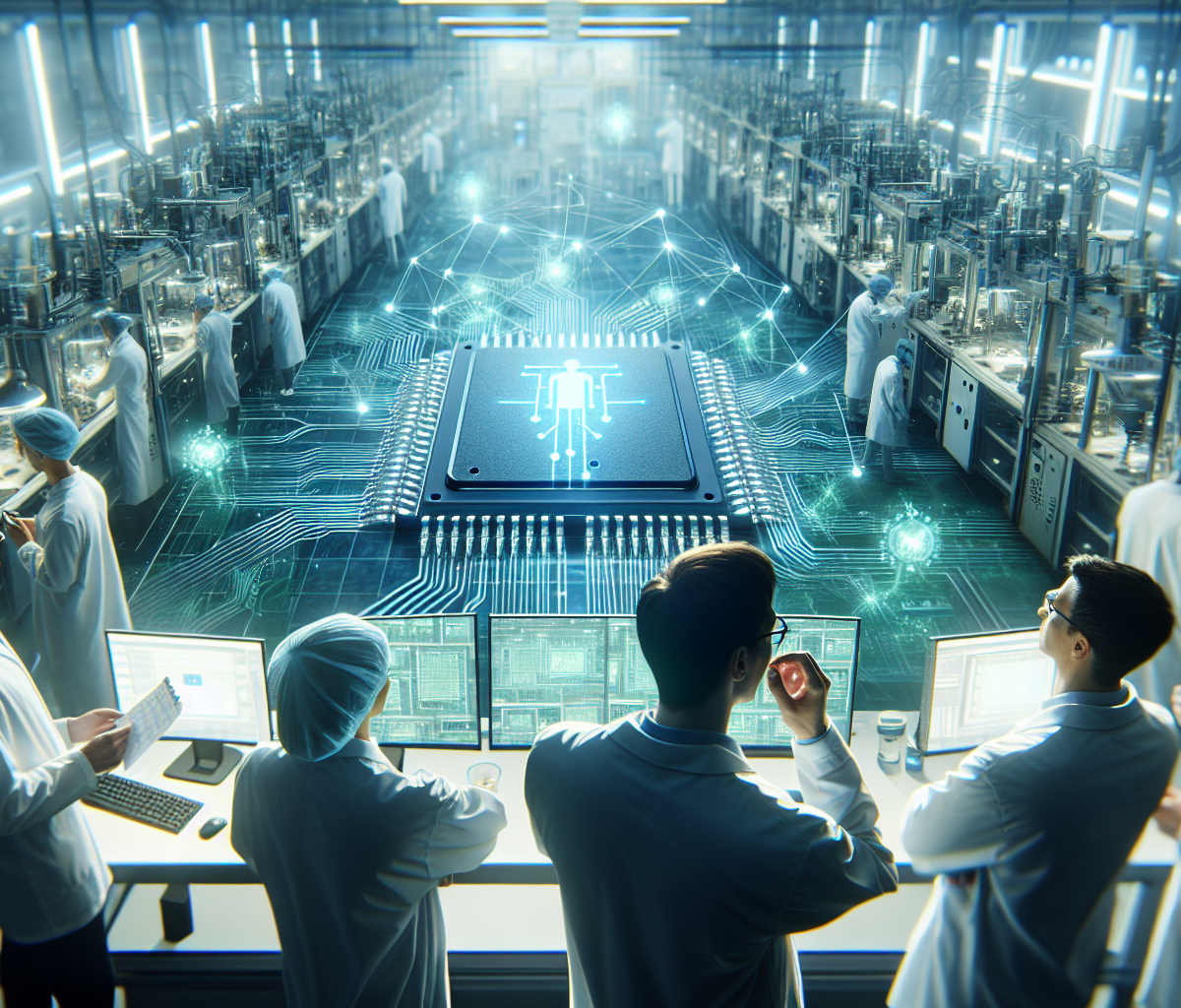
Google DeepMind is making a calculated hardware bet on autonomous AI agents, unveiling two specialized TPU8 variants explicitly engineered for the computational patterns that power multi-step reasoning systems. Unlike traditional inference, agentic workloads involve repeated loops of perception, planning, and execution—where models generate reasoning chains, evaluate options, and iterate before committing to actions. This creates distinct hardware demands: lower latency per inference step to keep decision loops responsive, higher throughput for parallel token generation during planning phases, and memory configurations optimized for maintaining context across extended reasoning traces. Google's specialized TPU8 chips address these patterns directly, offering measurable advantages over general-purpose processors that must compromise across diverse workload types. The hardware announcement arrives alongside TPU infrastructure expansion—a new Austrian data center generating 100 direct jobs and regional capacity building—positioning Google to absorb agent-scale inference demands before NVIDIA's dominance in AI accelerators extends into this emerging segment.
Critically, Google is coupling hardware innovation with aggressive developer capture through the return of its 5-Day AI Agents Intensive Course via Kaggle, effectively creating a conveyor belt from education to platform lock-in. Developers trained on Gemini APIs and Google's agent frameworks become natural adopters of TPU8 infrastructure, reducing switching costs and building competitive moats before rival hardware vendors mature their own agentic-specific offerings. This mirrors Google's historical playbook: own the educational pipeline, establish API conventions, then make the underlying silicon indispensable. However, the strategy carries execution risk. A senior AI infrastructure analyst noted the fundamental gap: specialized hardware only matters if the software ecosystem validates the architectural decisions. If open-source frameworks like LangChain or LlamaIndex establish different agent design patterns than Google's Gemini-centric approach, TPU8's optimizations become liabilities rather than advantages. The bet requires not just technical superiority but cultural adoption—convincing the developer community that Google's agent paradigms represent the inevitable standard.
Meta's re-entry into the large language model arena after a year-long hiatus introduces competitive pressure that sharpens Google's urgency. While specifics remain limited, Meta's renewed LLM focus suggests Llama model evolution could support agentic capabilities, potentially paired with alternative inference hardware partnerships. Google's TPU8 launch thus serves dual purposes: defensive positioning against NVIDIA's continued acceleration dominance while establishing proprietary hardware advantages before the agent market consolidates around technical standards. The economics matter acutely—specialized TPU8 configurations could reduce per-inference-step costs by 30-40% compared to general-purpose hardware for typical agent planning loops, translating directly into lower operational expenses for deployed agent systems at scale. Whether this translates to market capture depends entirely on whether Gemini-based agents prove materially superior to alternatives in real deployment scenarios. Google is banking that getting specialized hardware in place before the software consensus crystallizes will prove decisive.