
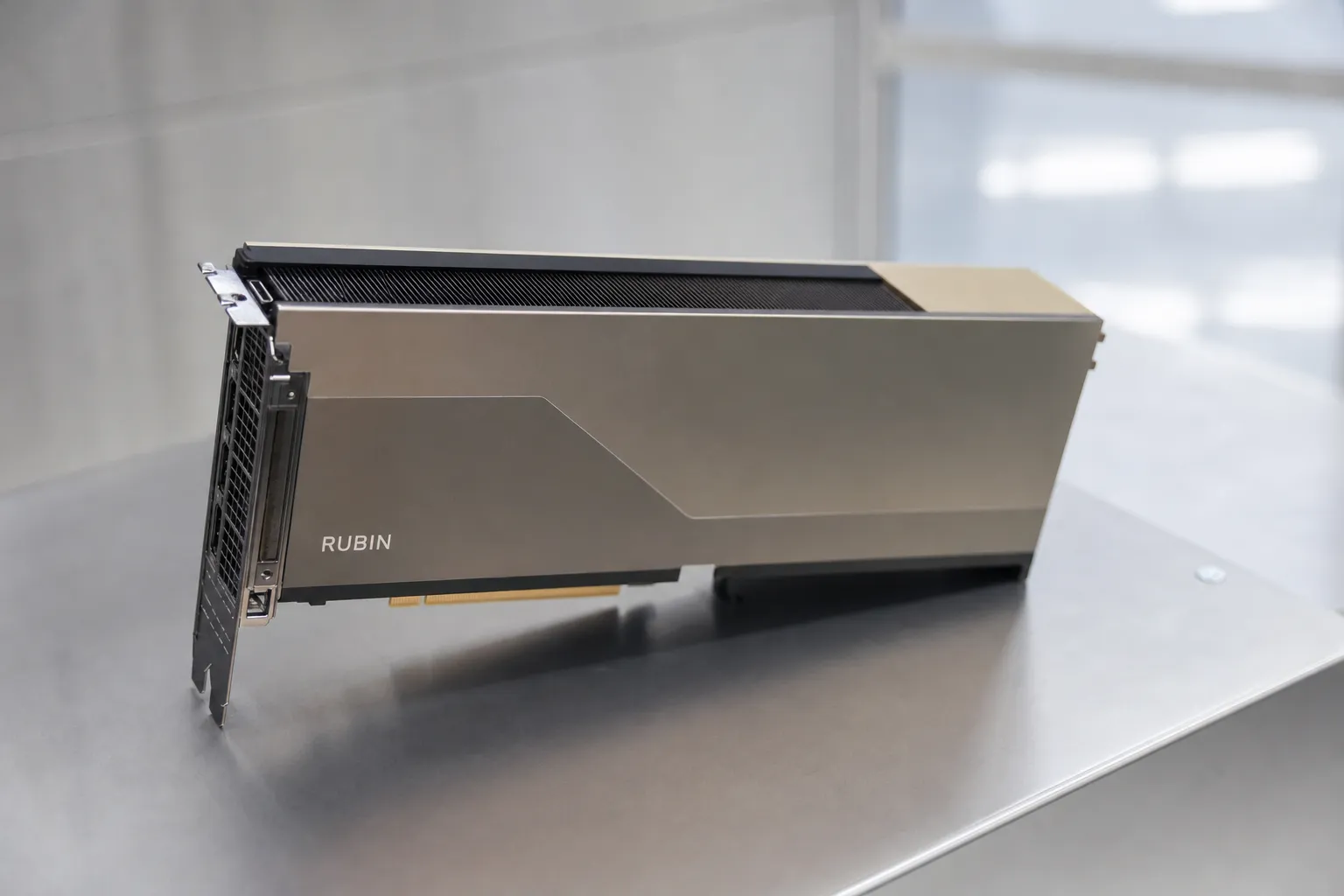
At SC26 in Chicago this week, NVIDIA's Ian Buck announced Nemotron for Science, autonomous agents designed to plan experiments, run code, and check results on researchers' own systems. The announcement also introduced the Rubin HPC GPU. Together, these tools represent NVIDIA's strategic effort to bring high-performance computing capabilities directly to research institutions and laboratories. Researchers have traditionally faced significant barriers to accessing sufficient compute resources for advanced AI experimentation, often forced to rely on shared institutional systems or expensive cloud services. NVIDIA's new agents and specialized hardware aim to change this dynamic by enabling researchers to conduct autonomous experiments on their own systems while maintaining complete control over their research workflows and intellectual property.
Supporting these core announcements, NVIDIA introduced the DGX Spark HPC Developer Kit, designed specifically for researchers, academics, and developers. The kit comprises a four-node cluster of DGX Spark systems connected in a ring topology, allowing each node to connect directly to its neighbors for collaborative research. This modular packaging design addresses a critical obstacle faced by research institutions: the significant cost and technical complexity of establishing in-house supercomputing infrastructure. By bundling a multi-node system into an accessible developer-focused product, NVIDIA provides academic institutions with a practical path to deploying sophisticated parallel computing and machine learning capabilities on their own premises, reducing exclusive reliance on cloud providers or shared supercomputing centers.
The SC26 announcements signal NVIDIA's strategic expansion beyond traditional component sales into providing integrated research infrastructure solutions tailored to academic environments. By combining autonomous research agents, specialized GPUs, and multi-node developer kits into coordinated product packages, NVIDIA is offering researchers a more complete toolkit than previously available from hardware vendors alone. This approach reflects a broader recognition: research institutions need more than processors alone—they require integrated software, accessible hardware configurations, and systems architected specifically for academic research workflows. For researchers and academic institutions, these offerings substantially lower barriers to accessing computational capabilities that were previously available mainly to well-resourced centers, potentially democratizing advanced AI research and broadening the base of institutions capable of conducting cutting-edge work.