
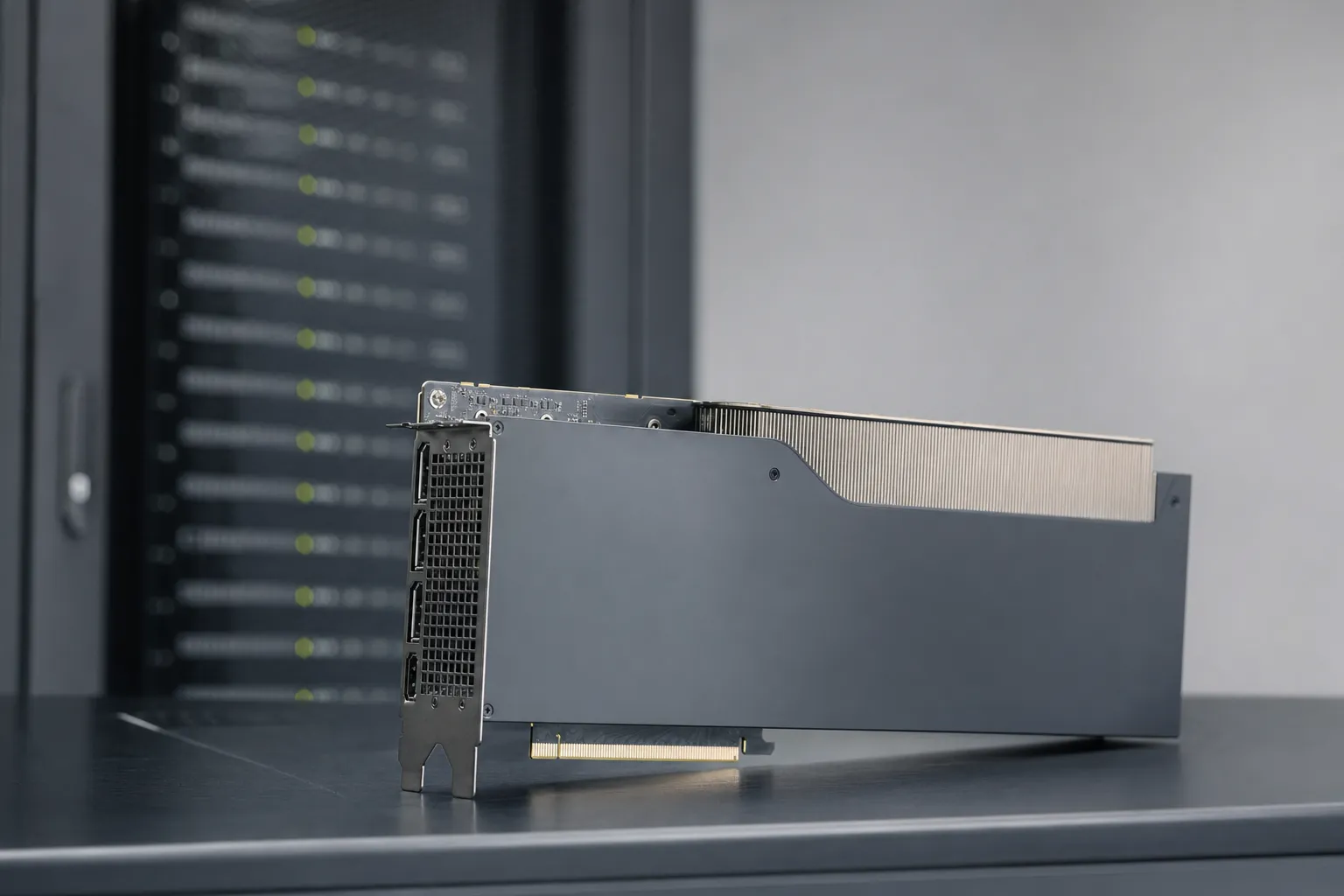
NVIDIA's latest strategic moves reveal a company extending its influence beyond GPU manufacturing into enterprise operations and geopolitical compute sovereignty. The launch of Minerva, an AIOps (artificial intelligence operations) platform, directly addresses a critical pain point in large-scale AI deployments: observability. Unlike traditional monitoring tools that passively collect metrics, Minerva actively ingests telemetry from both infrastructure and AI workloads, then applies purpose-built AI models to detect anomalies, predict failures, and recommend optimizations in real time. In practice, this means a financial services firm running large language models on NVIDIA infrastructure can automatically identify when GPU utilization is dropping due to inefficient data pipelines—insights that previously required manual investigation across fragmented dashboards. This vertical integration into software tooling creates stickiness: enterprises that adopt Minerva become more dependent on NVIDIA's ecosystem, not just for chips but for operational intelligence. Simultaneously, Jensen Huang's visit to Kazakhstan coincided with announcements of expanded AI infrastructure deployment in the region, signaling NVIDIA's pivot toward sovereign compute partnerships. Countries seeking independence from U.S.-based cloud providers are building locally hosted AI infrastructure on NVIDIA hardware, with multiple Kazakhstani technology firms and government entities committing to scale. This model—NVIDIA providing chips and software stacks to enable nations to build their own 'AI factories'—bypasses traditional cloud gatekeepers while locking customers into NVIDIA's CUDA ecosystem and specialized accelerators.
The financial performance underpinning these strategic moves is striking. NVIDIA reported 221% year-over-year AI revenue growth last quarter, more than doubling Broadcom's 117% growth in comparable segments. This disparity reflects NVIDIA's near-monopoly in high-performance AI accelerators: while Broadcom specializes in networking and storage infrastructure for data centers, NVIDIA controls the compute layer where actual model training and inference occur. Competitors like AMD and Intel have introduced alternatives—MI300 and Gaudi processors respectively—but adoption remains marginal, hamstrung by fragmentation in software frameworks and limited CUDA ecosystem parity. The switching costs are substantial: enterprises that have invested in CUDA-optimized codebases, trained staff, and deployed infrastructure face significant technical and organizational friction to migrate. This durability in competitive positioning is precisely what makes NVIDIA's expansion into observability and sovereign compute critical: it deepens moats that are already formidable.
A concrete example of this shift emerges from European financial services. Banks including Revolut and unnamed payment processors are deploying open-weight models on NVIDIA-accelerated private infrastructure rather than consuming models via cloud APIs. This hybrid ownership model—where enterprises maintain their own hardware while leveraging open models and NVIDIA software stacks—represents a departure from the software-as-a-service paradigm that dominated cloud computing. These organizations gain cost predictability and data residency, while NVIDIA gains long-term relationships with high-value customers and expanded addressable market beyond cloud hyperscalers. The implication is structural: as enterprises mature from experimenting with AI via cloud APIs to productionizing at scale, they increasingly choose private infrastructure running NVIDIA silicon. Minerva, CUDA libraries, and emerging sovereign compute partnerships create a comprehensive moat around this shift. For NVIDIA, the story is no longer about GPU unit growth alone—it's about capturing the entire operational layer that keeps AI factories running, a position with durability far exceeding commodity chip competition.