
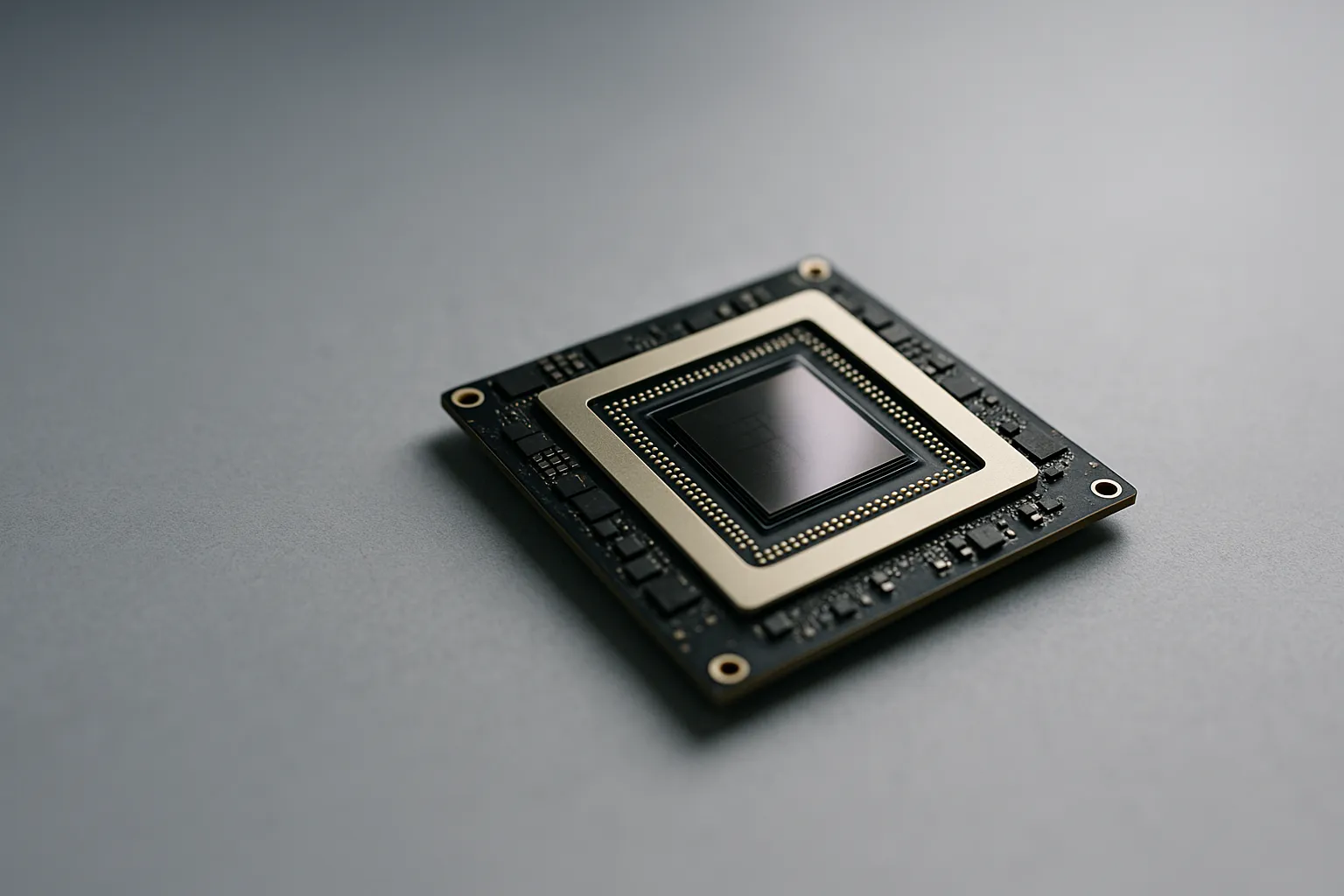
NVIDIA's RTX Spark line officially launched this week across major PC manufacturers, marking the first consumer deployment of Blackwell RTX architecture in thin-and-light Windows laptops. Starting at $2,399, devices from Dell, HP, Lenovo, ASUS, MSI, and Microsoft bring the full NVIDIA AI platform to mainstream premium machines. The significance lies not in raw compute alone—RTX Spark competes directly with Apple's M4 Max Mac Studio ($3,999 base) and Intel's Arc GPUs by offering comparable performance density at lower entry pricing. More critically, RTX Spark unifies NVIDIA's developer ecosystem (CUDA, cuDNN, TensorRT) with consumer hardware, effectively making local inference and fine-tuning accessible without cloud subscriptions. This represents a calculated expansion of NVIDIA's moat beyond data centers into edge devices where inference latency, privacy, and cost-per-inference increasingly matter to enterprise customers.
The 128GB unified memory architecture directly addresses a pain point for creators and AI developers: model inference and content generation workflows that previously required cloud APIs or expensive workstation upgrades. Unified memory eliminates separate GPU and CPU memory pools, allowing larger models (up to 70B-parameter LLMs) to run locally without memory bottleneck serialization. For video editors using NVIDIA DLSS 4.5 upscaling, the architecture reduces frame-buffer copies; for AI researchers training retrieval-augmented generation (RAG) systems, local inference on proprietary data eliminates API costs and compliance friction. Competing platforms—Mac's unified architecture on M4 Max lacks CUDA ecosystem depth, while Arc GPUs suffer fragmented software support—leave RTX Spark as the first mass-market option combining deep learning maturity with consumer-grade accessibility. This matters because it collapses the distinction between inference and training workloads for mid-market creative studios and enterprise AI teams.
RTX Spark's launch accelerates NVIDIA's edge-to-cloud funnel strategy, positioning consumer laptops as beachheads for broader infrastructure lock-in. Developers building locally on RTX hardware naturally scale to NVIDIA data centers (H100, Blackwell) for production inference, reinforcing CUDA's dominance across the entire pipeline. NVIDIA's simultaneous expansion of DLSS 4.5 cloud controls via GeForce NOW, coupled with academic outreach in Europe for scientific computing, signals a coordinated push to embed Blackwell across consumer, cloud, and research tiers. The competitive landscape—Apple's vertical integration, Intel's late-stage Arc pivot, and AMD's nascent MI300X adoption—remains fractured. RTX Spark's $2,399 starting price, unified memory capacity, and CUDA ecosystem depth position it as the default choice for AI-native content creators and enterprise developers unwilling to sacrifice software maturity for architectural novelty. Market penetration at this price point could crystallize NVIDIA's developer preference for the remainder of the decade, effectively cementing Blackwell's role as the inference standard across consumer and cloud.