
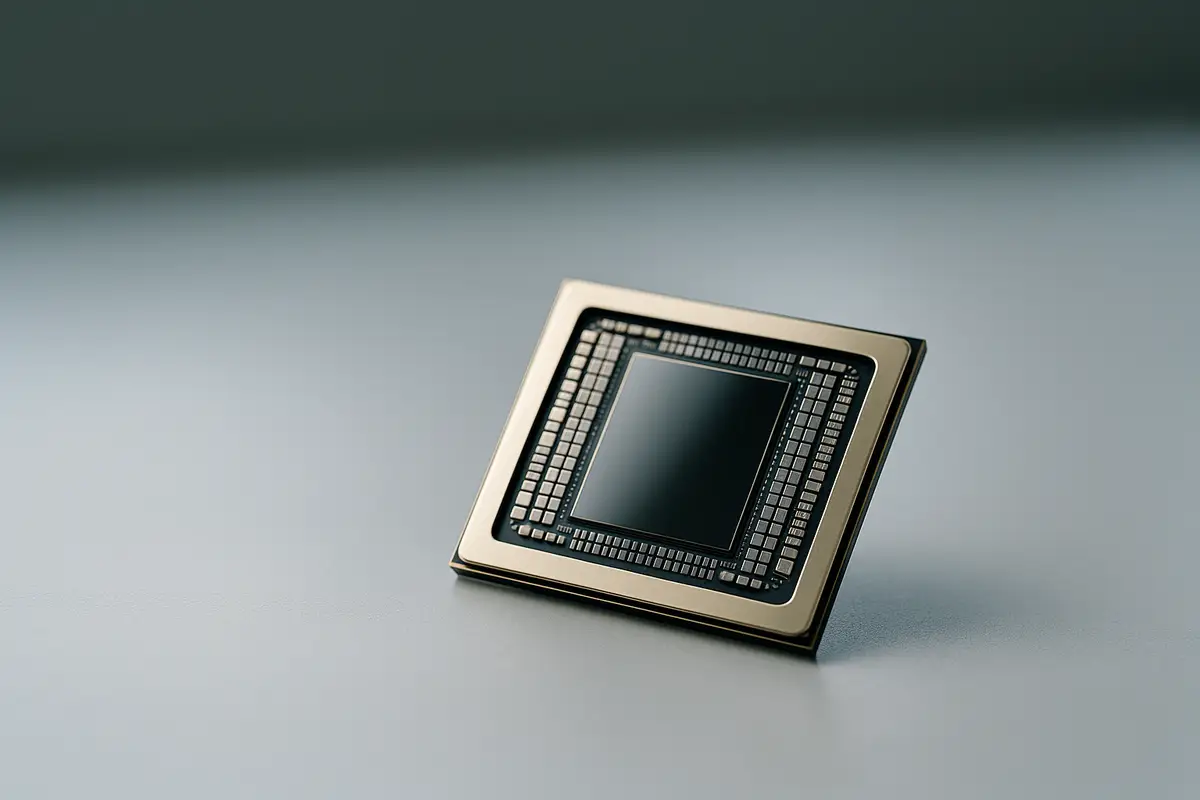
NVIDIA's Blackwell architecture is delivering measurable performance gains across the inference landscape. OpenAI's latest GPT-6 Astra Ultrafast model, running on Blackwell GPUs through the OpenAI API, demonstrates up to 8x faster inference compared to previous generations. This acceleration represents a critical milestone for production AI workloads, where inference costs and latency directly impact user experience and operational economics. The availability of Astra Ultrafast to ChatGPT Work and Codex users signals that Blackwell inference optimization is moving beyond research into commercial deployment at scale.
Simultaneously, NVIDIA is addressing the opposite end of the compute spectrum through the DGX Spark, now available with 64GB of unified memory this month. This localized AI hardware enables developers to build and test increasingly capable open-source models on-device, reducing reliance on cloud APIs for development workflows. The convergence of shrinking model sizes and more powerful local hardware creates flexibility for enterprises managing both latency-sensitive applications and cost-sensitive development environments. This dual strategy—optimized cloud inference through Blackwell and accessible local development through DGX Spark—positions NVIDIA to capture value across the entire AI infrastructure stack.
The broader significance lies in NVIDIA's systematic approach to infrastructure dominance. Whether through maximizing return on investment in megawatt-scale AI factories or enabling edge deployment of increasingly capable models, NVIDIA's hardware and software ecosystem remains central to any AI compute decision. As AI workloads fragment across cloud, edge, and local environments, NVIDIA's presence across all three layers—from Blackwell data center GPUs to consumer-focused inference accelerators—reinforces its architectural advantage and deepens customer lock-in through the CUDA ecosystem.