
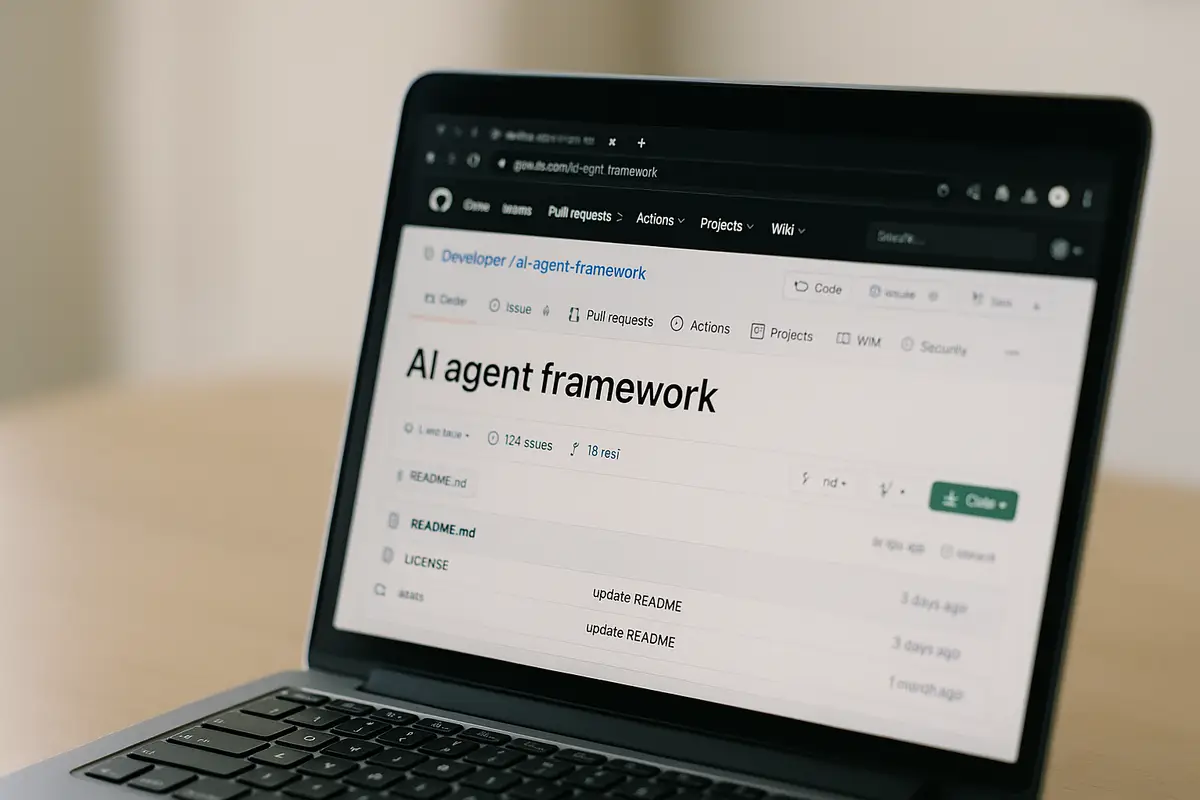
GitHub's trending repositories today paint a clear picture: the developer community is urgently building infrastructure to operationalize AI agents. Cloudflare's security-audit-skill project, which gained 3,155 stars today, leads the charge by providing a specialized skill module for automated multi-phase security audits with independently verified, machine-readable findings. This isn't experimental code generation—it's a production tool designed to run serious security work through agentic systems. Meanwhile, affaan-m/ECC's 1,012-star jump suggests developers are equally focused on optimizing the foundational performance and behavior layers that make agents reliable, addressing concerns around memory management, security boundaries, and skill execution across multiple AI models including Claude, Codex, and Cursor.
What distinguishes today's trending spike from earlier AI hype is the emphasis on scale and standardization. Trycua's cua project, which gained 859 stars, explicitly tackles computer-use 2.0 with open-source drivers, cross-OS fleet management, and benchmarks for training and evaluation. BuilderIO's agent-native framework rounds out the ecosystem by providing a general-purpose methodology for building agentic applications. These projects acknowledge that AI agents have moved past proof-of-concept territory and now require the kind of infrastructure—monitoring, benchmarking, cross-platform compatibility, and security verification—that enterprise systems demand.
The convergence of these projects signals an inflection point in how developers perceive AI agents. Rather than viewing them as novelties or research subjects, the community is treating them as operational tools requiring the same rigor applied to traditional software systems. Security auditing, performance optimization, fleet management, and framework standardization are typically concerns of mature technology categories, not emerging experiments. This shift suggests that AI agents aren't just trending topics anymore—they're becoming infrastructure, and developers are building the foundation layers that will define how these systems operate reliably in production environments.