
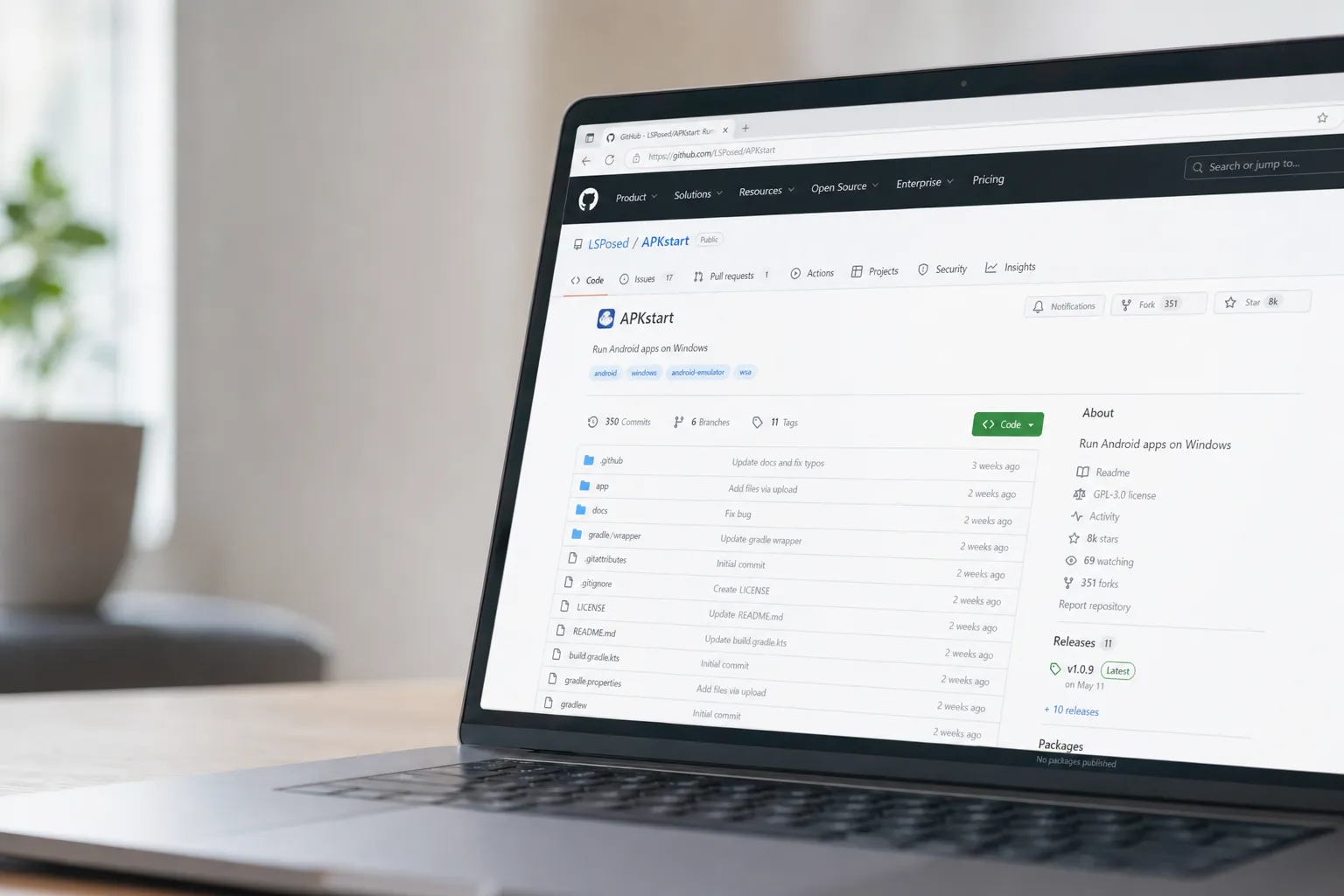
RoutineMiku's APKstart has become a GitHub sensation in just three weeks, gaining 8,125 stars with an average of 388 new stars daily. The Windows tool solves a deceptively simple problem: running Android APK files natively on a Windows desktop. Users double-click an APK to install it, with applications appearing as independent windows complete with native desktop icons and integration. Written in JavaScript and licensed under MIT, the project stands out by including a self-contained QEMU runtime, eliminating the need for separate emulator configuration.
The rapid adoption reflects a clear developer need: Windows users lacked native tooling for running Android applications. APKstart addresses this with simplicity—double-click installs, independent windows, desktop icons—paired with a self-contained QEMU runtime that eliminates external dependencies. The architecture combines Electron for the Windows UI layer with QEMU for Android execution, embodying a deliberate tradeoff: ease of use and dependency simplification over raw performance. By bundling components and hiding complexity, APKstart extends Android development workflows beyond mobile specialists to Windows developers who need to run or test APK files.
The rapid adoption signals shifting expectations in developer tools: eliminating setup friction now rivals raw capability for adoption. APKstart's approach—bundling QEMU with native Windows integration—extends Android development from mobile specialists to any Windows developer. This pattern of pre-packaged, containerized runtimes with simplified interfaces may influence future cross-platform tools. As Windows increasingly competes for Android development workflows, projects like APKstart demonstrate that accessibility and ease-of-use can drive explosive adoption among developers previously locked out by complex alternatives.