
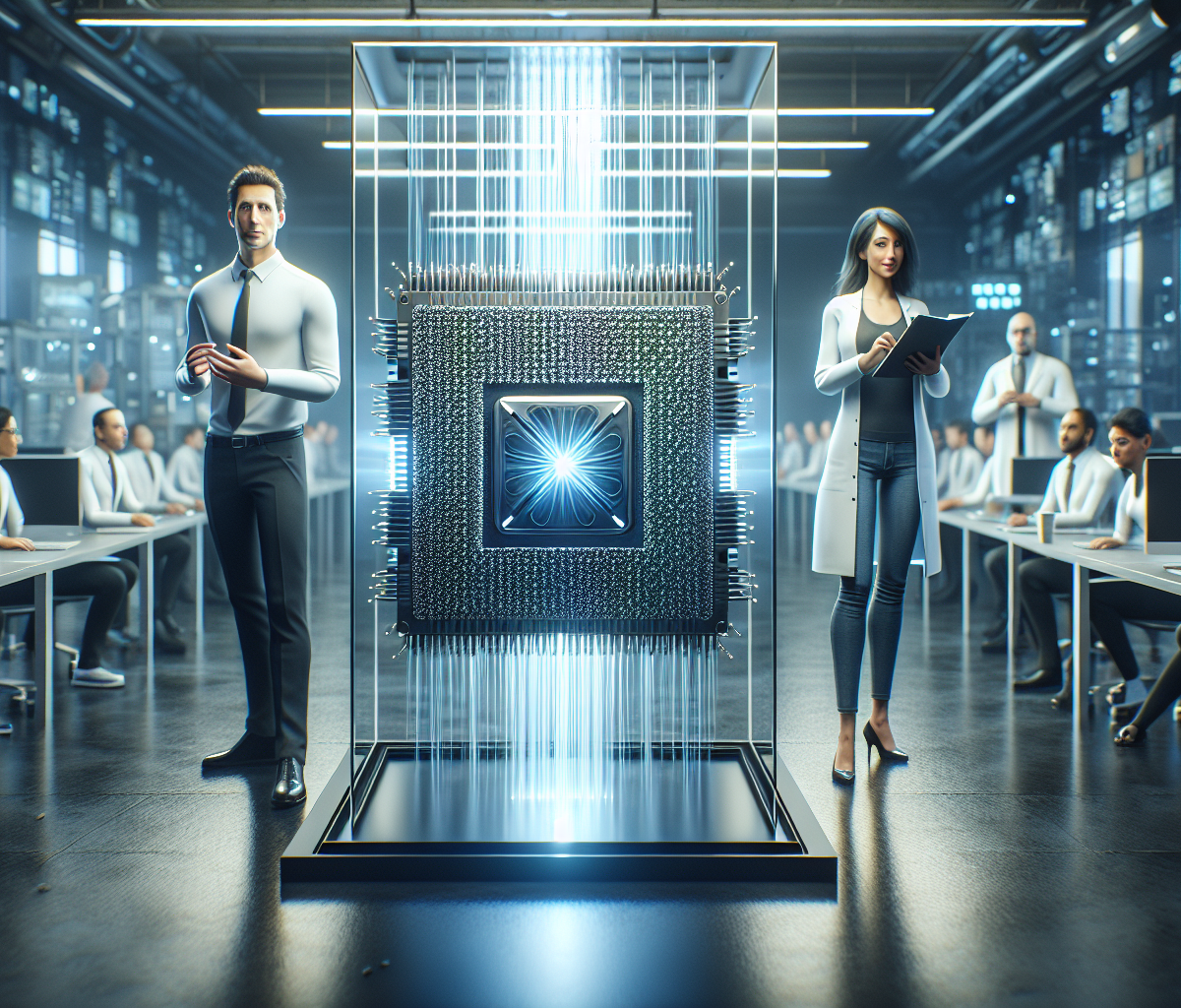
Google DeepMind this week unveiled two specialized TPU variants within its eighth-generation processor family, marking a significant hardware shift toward supporting AI agents—systems capable of autonomous reasoning and multi-step task execution. While Google has not yet disclosed specific latency improvements or memory configurations for the new chips, the company emphasized that traditional accelerators designed for large language model inference alone cannot efficiently handle the dynamic, sequential decision-making required by agentic AI workloads. The specialized TPUs address a core architectural challenge: agents must balance rapid inference across smaller models with complex reasoning tasks, a pattern fundamentally different from the batched, stateless inference that powers current generative AI applications. This distinction underscores why Google believes purpose-built silicon is essential as the AI industry shifts from static language models toward autonomous systems.
The timing of the TPU announcement coincides with Google's broader infrastructure expansion, including its first Alpine data center in Kronstorf, Austria—a facility expected to generate 100 direct jobs and support increasingly demanding workloads across Europe. Google's layered approach to agentic AI extends beyond hardware: the company is simultaneously launching an AI Agents Intensive Course with Kaggle, signaling commitment to both the infrastructure layer and developer adoption. The five-day training program aims to equip practitioners with hands-on experience building agent systems, suggesting Google views developer education as critical to realizing the agentic era. This dual investment—hardware optimization plus skill development—reflects how seriously Google DeepMind is treating the transition from static models to dynamic, reasoning-capable systems.
The competitive landscape matters here. Nvidia's H100 and upcoming Blackwell GPUs remain the industry standard for large-scale AI training, but Google's TPU-first strategy positions the company to optimize for post-training inference and agentic reasoning at scale. By designing specialized silicon for agent workloads rather than attempting to retrofit general-purpose GPUs, Google may achieve cost and efficiency advantages in production environments where agents must run continuously. However, availability timelines and pricing details remain undisclosed, leaving questions about market adoption. For enterprises building agent systems, Google's announcement suggests that specialized hardware tailored to agentic patterns—rather than one-size-fits-all accelerators—will become table stakes as these systems move from research into production.