
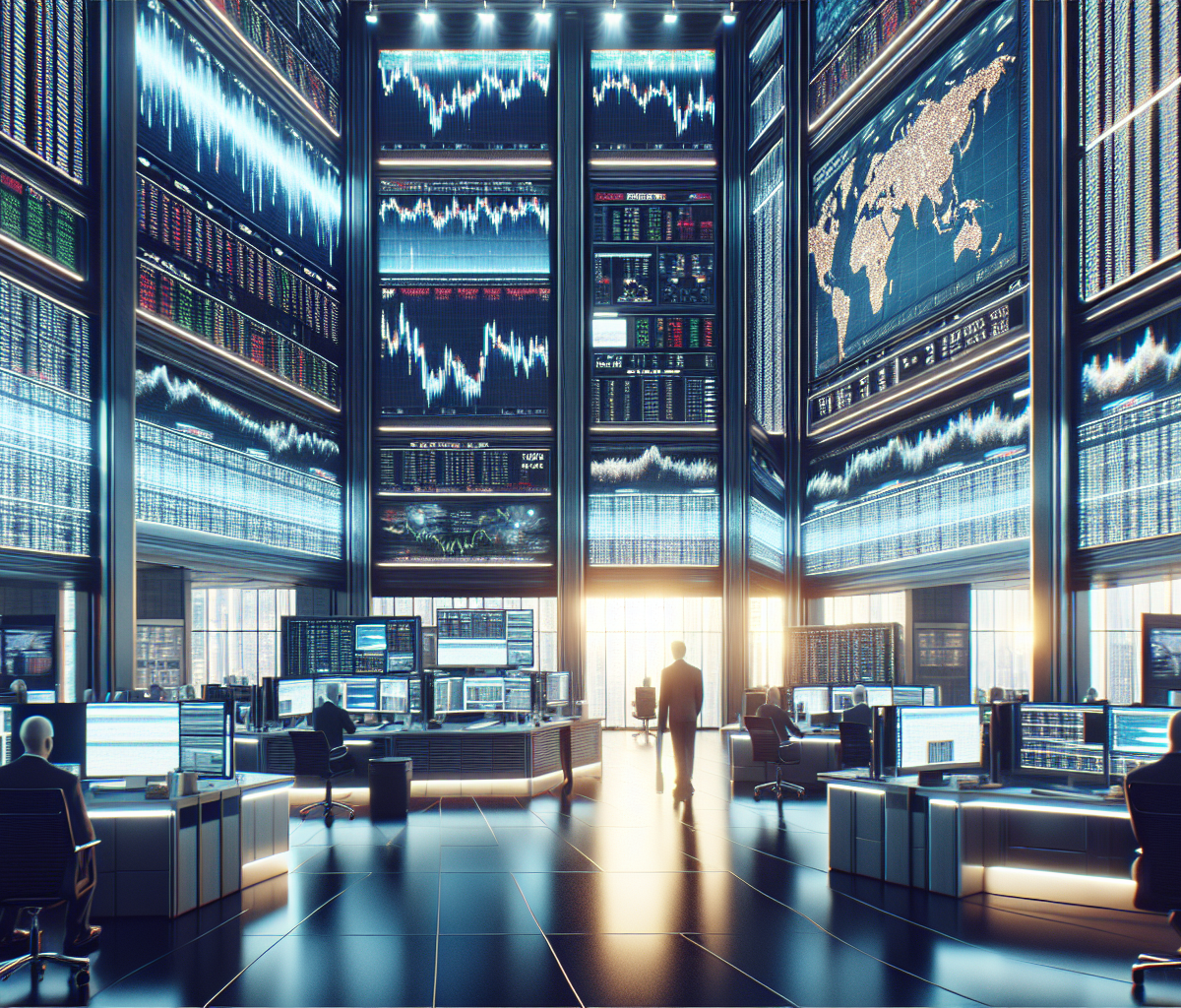
Goldman Sachs announced in early 2024 a major restructuring of its equities trading operations, eliminating approximately 40% of its traditional human traders across its New York, London, and Tokyo trading floors. The reduction stems directly from the full deployment of proprietary AI-driven execution algorithms that now handle the bulk of equity order routing, trade matching, and real-time risk assessment. The bank's new "Sigma" trading platform—built on neural networks trained on two decades of internal trade data—now executes roughly 60% of the firm's daily equity volume with minimal human intervention. This marks a dramatic acceleration from 2022, when AI systems handled just 15% of execution. Goldman's Chief Operating Officer declined to comment on specific headcount figures but confirmed that "our technology roadmap reflects market realities," acknowledging that algorithmic efficiency has become existential for profitability in equities trading.
The shift positions Goldman ahead of competitors racing to automate their trading desks. Citadel Securities, the world's largest market maker, has already replaced roughly 30 traders with algorithmic systems over the past three years, while JPMorgan's LOXM platform has absorbed similar volumes since 2020. However, Goldman's move is particularly significant given the bank's historical reliance on the prestige and political influence of its trading floor—a cultural institution since the 1980s. The move also signals deeper anxiety about margin compression: equities trading spreads have eroded 40% since 2015, and human traders cannot compete on speed or cost with machines. A senior fintech executive at Virtu Financial noted off-record that "human traders today are arbitrage machines, and machines do that better. Goldman is just admitting it publicly."
The consolidation raises systemic risk questions. During the August 2024 market volatility spike—when the Nikkei fell 12% in a single session—regulatory filings showed that algorithmic traders, including Goldman's systems, initiated forced liquidations that amplified losses by an estimated 3-4 percentage points before human intervention resumed. The Federal Reserve has begun stress-testing banks on "AI cascade failure scenarios" where poorly correlated algorithms trigger feedback loops. Yet Goldman's automation bet reflects a competitive logic that individual firms cannot ignore: failing to deploy cutting-edge execution AI means ceding market share to competitors who do, even if systemic risk rises. Wall Street's eternal narrative—that humans are obsolete, followed by expensive hiring booms once they're proven necessary—may be reaching an inflection point. This time, the math on retraining displaced traders simply doesn't work.