
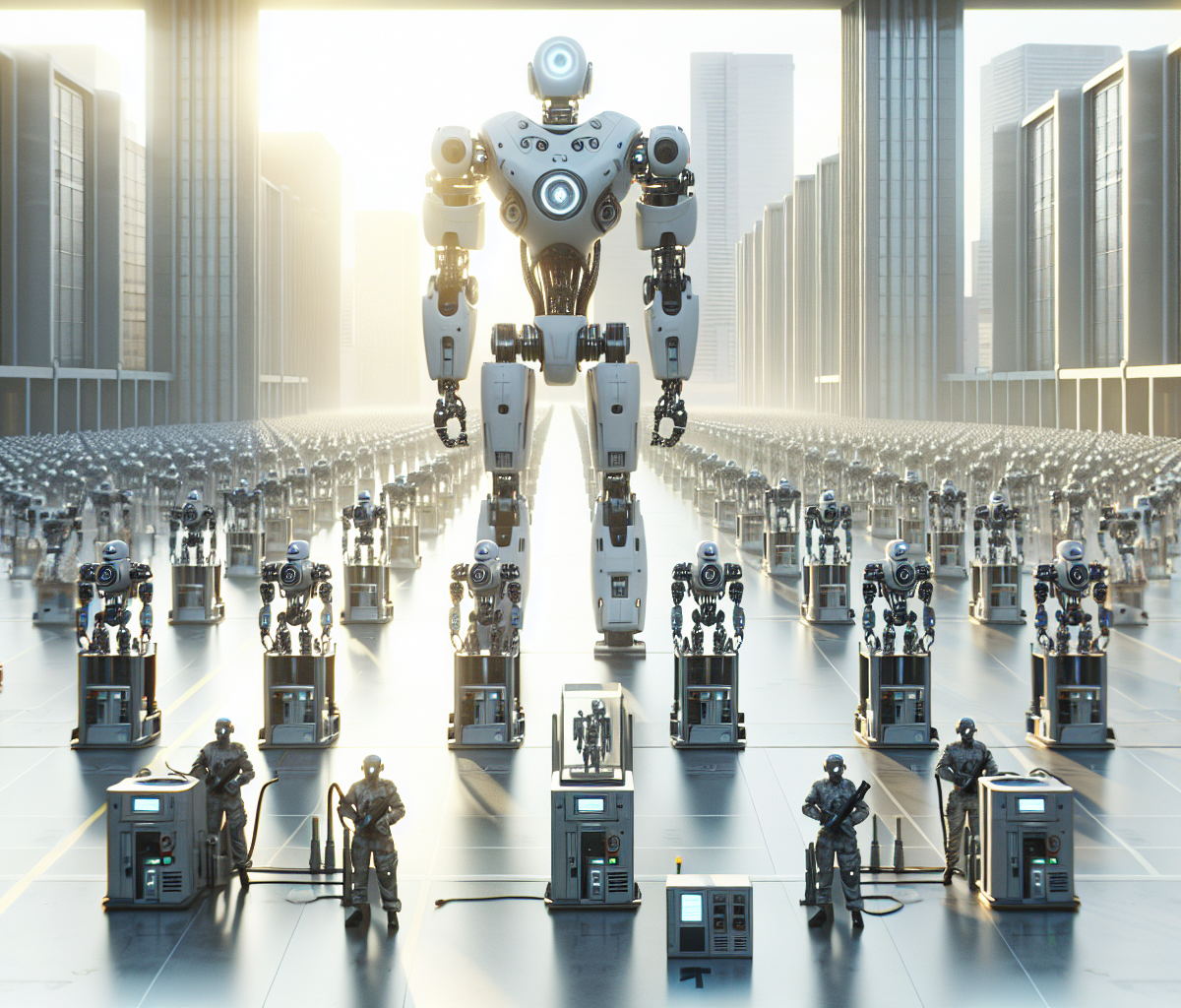
The robotics industry has crossed a critical inflection point. Amazon now operates more than one million robots across its fulfillment centers, handling tasks from sorting to intra-facility transport. Meanwhile, DARPA and industry leaders like Boston Dynamics have proven that humanoid robots can perform complex, real-world work. Yet as deployments scale and robots move from controlled factory floors into shared human spaces, a fundamental problem has emerged: how do you actually govern, secure, and integrate autonomous systems reliably at mission scale? This gap between capability and trustworthiness is reshaping the industry's priorities.
To address this, researchers have developed GoZTASP, a mission-scale governance platform that treats autonomous systems—drones, robots, sensors, and human operators—as an integrated zero-trust architecture. Rather than assuming robots are inherently trustworthy once deployed, GoZTASP continuously validates the security and compliance of every component through Secure Runtime Assurance. This matters because autonomous systems operate in unpredictable, safety-critical environments where a single compromised sensor or miscommunication could cause harm. In parallel, the industry is finally investing in understanding human perception of robots. Research into how people actually perceive and interact with robots in offices, homes, and factories reveals that technical performance alone isn't enough—acceptance, predictability, and safety perception determine real-world viability. Recent breakthroughs, like Boston Dynamics' Digit learning new movements, show capability. But the simultaneous focus on governance and human factors shows the industry recognizes capability without trust is incomplete.
The stakes extend beyond warehouses. Researchers have developed Wi-Fi systems robust enough to operate inside nuclear reactors, designed to support remote robotics during dangerous decommissioning work. These domain-specific challenges underscore a broader truth: robots must work in environments humans find hazardous, unreliable, or simply inaccessible. As CEO Andy Jassy emphasized, robotics drives Amazon's operational efficiency, but only if systems remain secure and predictable. The next phase of robotics growth won't be defined by faster, stronger machines—it will be defined by platforms that keep those machines trustworthy, transparent, and integrated alongside human workers and operators.