
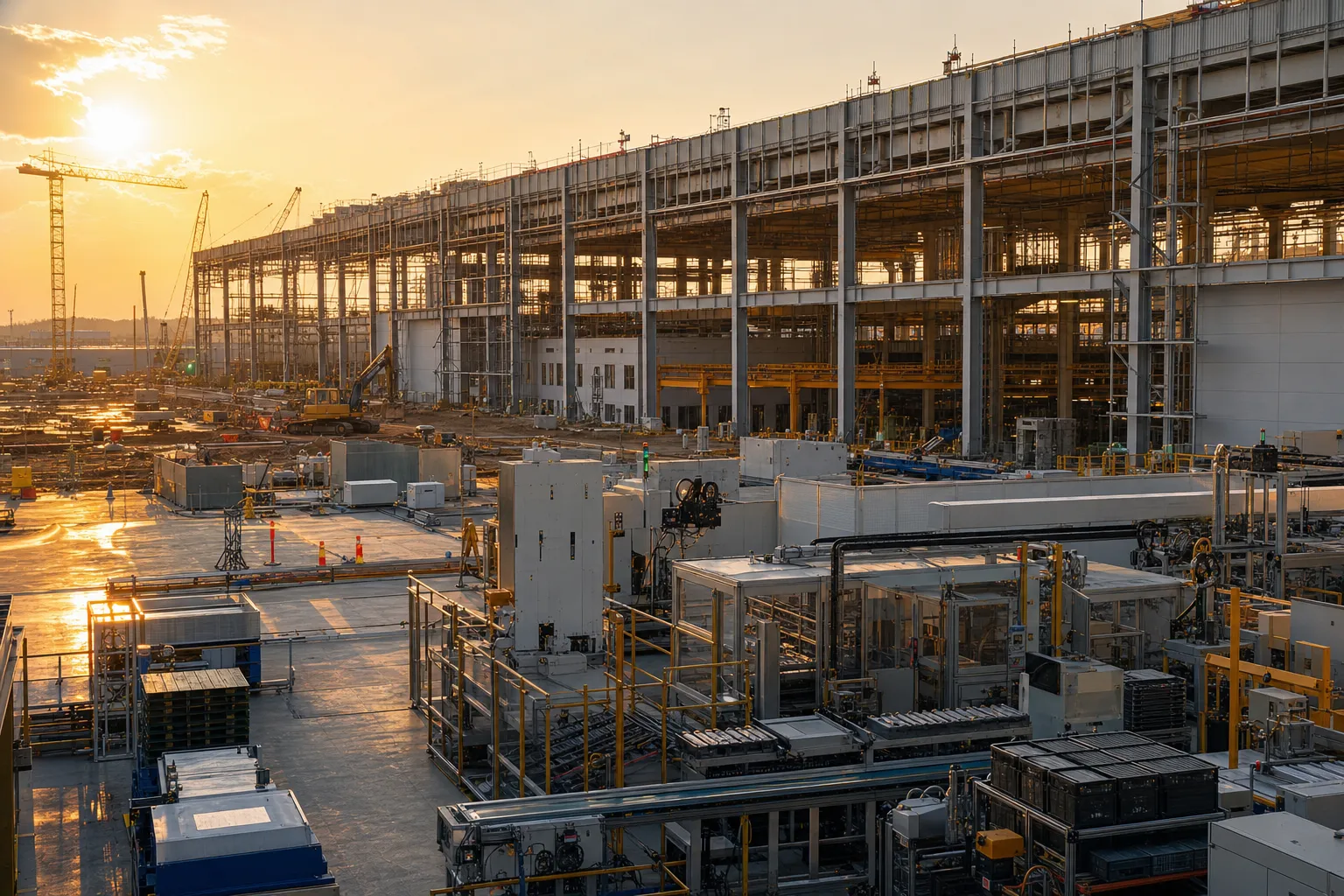
Sila, a battery manufacturer, has signed an agreement with Panasonic Energy, a major global battery manufacturer, to supply silicon-carbon anode material, in a partnership potentially worth more than $1 billion over time, according to Sila1. The agreement arrives as welcome news for the battery industry, which has experienced several years marked by high-profile failures1. According to Sila, their anode material weighs approximately one-fifth as much as conventional graphite anodes while cutting material volume in half, with potential to improve overall energy density1. The company characterizes this technology as a possible key to developing smaller and lighter batteries for various applications1.
A major portion of the financial backing for this manufacturing facility comes from federal government support: specifically, a $1.4 billion loan provided by the Trump administration's Defense Department1. This direct government investment demonstrates how substantially the political landscape surrounding battery manufacturing has shifted in recent years1. The battery industry has increasingly focused on geopolitical considerations as a central concern, moving decisively beyond purely market-driven competition models1. This shift from private-sector-driven competition to direct government-backed development represents a fundamental change in how battery technology advancement is pursued in the United States1.
This government-backed manufacturing arrangement demonstrates how the battery industry development model has fundamentally changed in the United States1. Federal funding through the Defense Department now plays a direct, substantial role in battery production development—a significant shift from previous reliance primarily on private-sector-driven innovation1. The arrangement exists within a broader context where the battery industry has increasingly focused on geopolitical competition and supply chain security concerns1. The political landscape surrounding battery manufacturing has shifted notably in recent years1. While batteries can serve as tools for energy transition and emissions reduction, the current industry focus emphasizes geopolitical dimensions of technology competition1.