
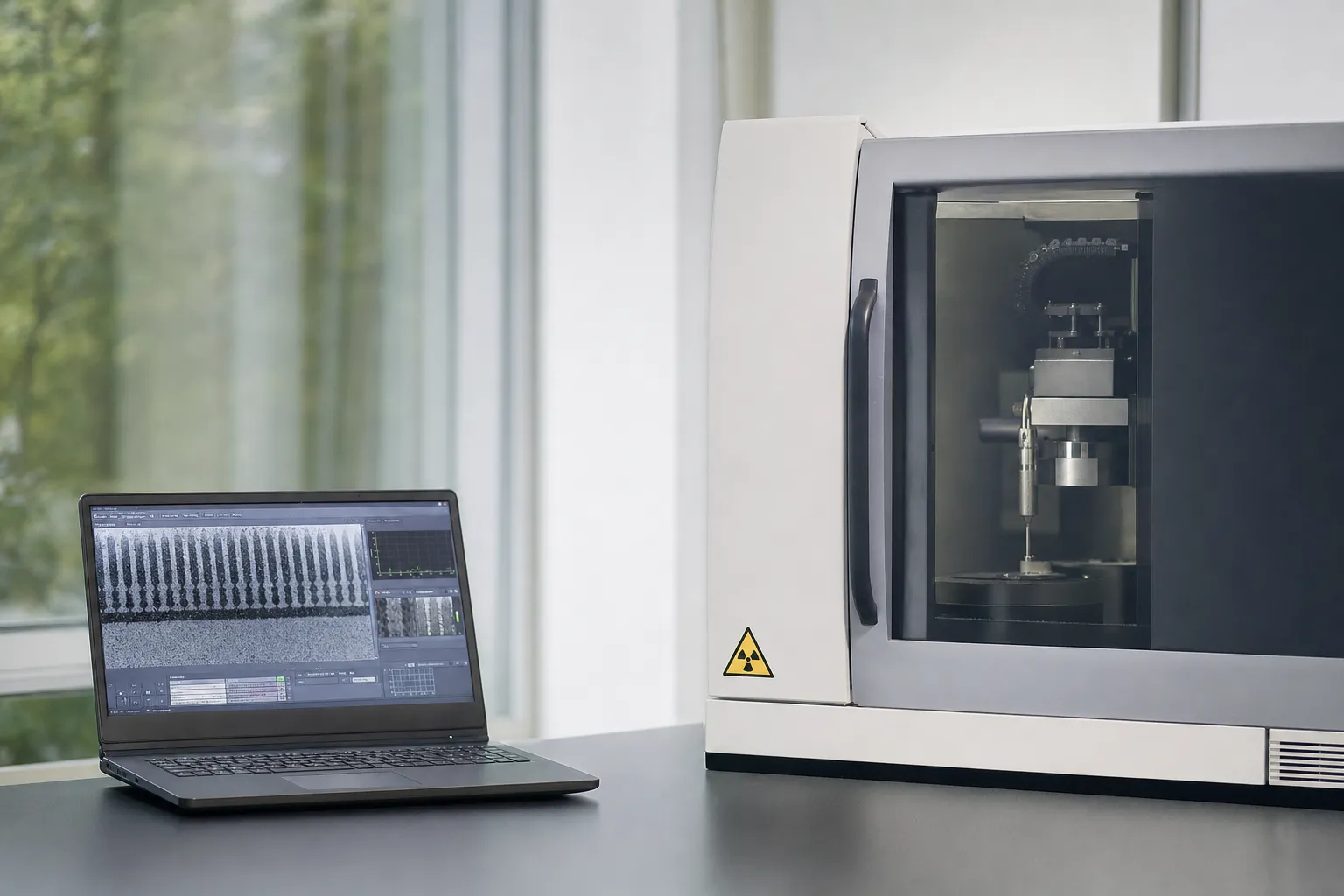
Researchers have unveiled systems for autonomous scientific experimentation on physical instruments. "Auditable Human-Agent Teams for Autonomous X-ray Experimentation" addresses a critical challenge: implementing and sustaining closed-loop autonomous systems on real laboratory equipment. The system uses AI agents to conduct autonomous X-ray experiments with human oversight, enabling closed-loop feedback for materials research without extensive custom engineering. This lowers the implementation barrier, making autonomous experimentation more accessible to laboratories beyond well-resourced institutions. The work demonstrates that AI agents can sustainably operate on physical instruments—a major step beyond simulation-based demonstrations.
This capability is part of a broader shift in scientific computing. Multimodal agents now tackle complex data analysis at scale: EarthRecord uses autonomous agents to extract land-change patterns from four decades of satellite imagery—analysis that would be impractical for human teams. These deployments show AI agents moving from labs into real-world scientific work, handling ambiguity, temporal complexity, and data scale. The convergence across domains—from autonomous experimentation to satellite analysis—signals a new era where agents accelerate scientific discovery. Yet validation remains incomplete; researchers are still measuring how reliably these systems perform on genuine scientific challenges.
Adoption faces technical and operational hurdles. Autonomous agents on physical instruments require robust error handling, reliability guarantees, and human auditability—areas still evolving. Cost reduction compared to manual workflows remains unclear, and regulatory approval may slow deployment in clinical or industrial settings. For satellite analysis, a key question is whether models trained on historical patterns reliably predict future changes. These challenges suggest a transition phase lasting several years, during which autonomous agents will gradually shift from research demonstrations to operational tools. When solved, they could substantially accelerate discovery across materials science, Earth observation, and beyond.