
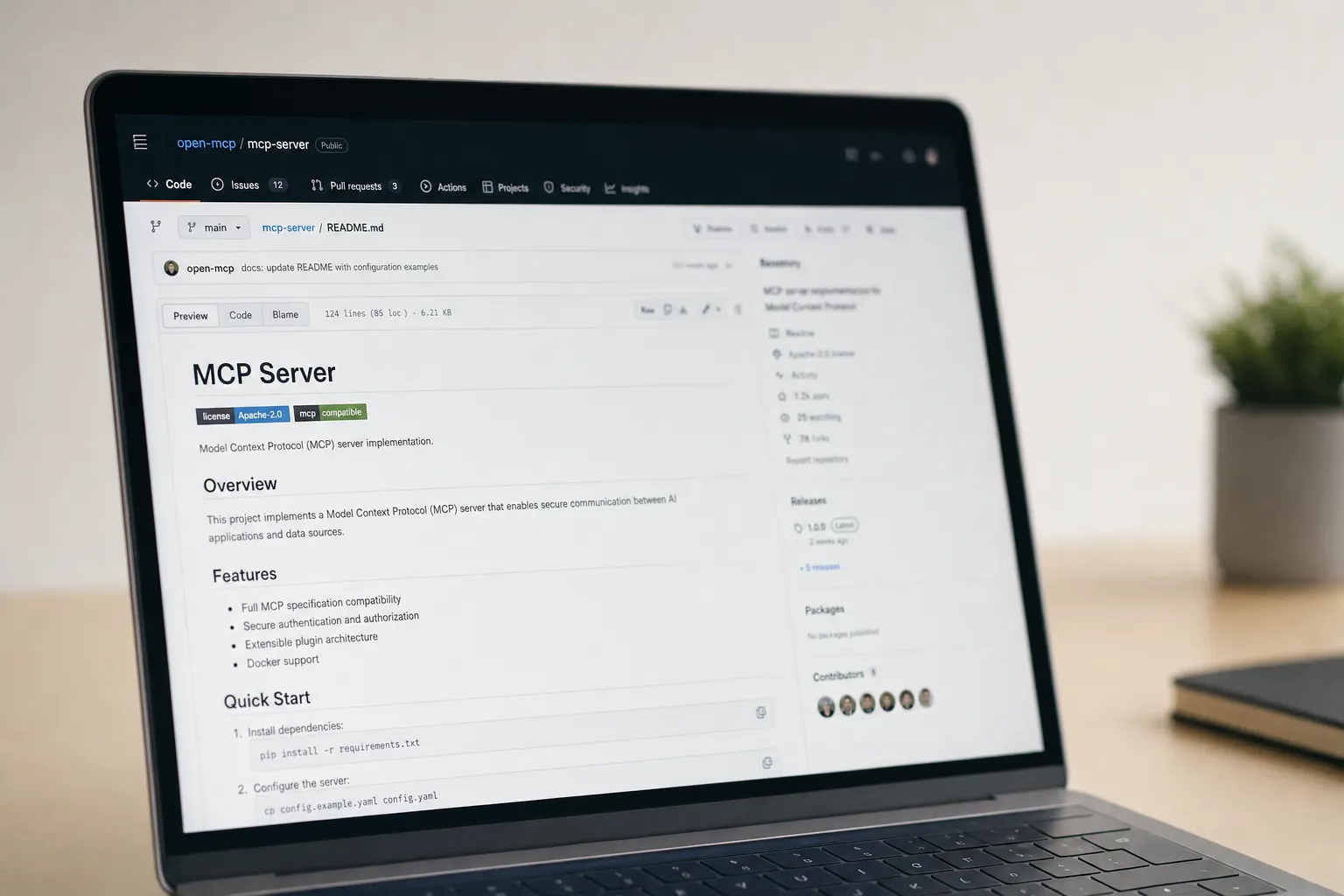
The open-source AI agent ecosystem is consolidating around a critical realization: enterprises want to own their inference pipelines, control their data flows, and avoid vendor lock-in costs. This week's GitHub activity reflects a decisive shift. Scenario Labs' skills framework hit 224 stars in a single day, while Crawl4AI—an Apache-licensed web scraper and data extraction tool—maintains a steady 96-star daily pace with 86,882 total stars. Both projects embrace Model Context Protocol (MCP) compatibility, the emerging standard for AI agent interoperability championed by Anthropic. More significantly, these projects are not isolated tools: they're converging into a self-hosted stack that rivals the feature parity of closed-source agent platforms. Scenario Labs specifically addresses the 'model picker' problem—automatically selecting the right inference model, pre-calculating costs, and maintaining brand consistency across generated media. This solves a tangible pain point for enterprises running multi-model deployments locally or on private infrastructure.
The cost argument is now quantifiable. Self-hosting tools like Crawl4AI eliminates per-request API fees; users self-deploy via Docker or cloud VMs and retain full data sovereignty. PR Agent (14,504 stars, +279 today) demonstrates this in code review workflows—enterprises can run local LLM inference instead of routing sensitive code to third-party services. n8n's 209,533-star workflow platform has similarly positioned itself as a fair-code alternative to proprietary RPA vendors, combining visual builders with custom code and 400+ integrations. These projects share a common architecture: MCP-compatible server layers, pluggable model backends (supporting Ollama, llama.cpp, and commercial APIs as fallbacks), and MIT or Apache-2.0 licensing for production deployment. The GitHub metrics are not noise—Crawl4AI, Scenario Labs, and PR Agent collectively gained over 600 stars in recent days, suggesting rapid adoption among developers evaluating self-hosted alternatives for Q1 2025 infrastructure planning.
The competitive pressure is now upstream. Proprietary platforms charging per-inference-call or monthly seat licenses face defection risk from enterprises with in-house DevOps capacity. However, fragmentation poses a real risk: competing MCP implementations, divergent model quantization formats, and ecosystem sprawl could fracture the promise of interoperability. The next inflection point is orchestration—can these tools cleanly compose into end-to-end workflows without custom glue code? n8n's integrations marketplace and Crawl4AI's MCP server design suggest yes, but adoption at scale requires standardization, not just licensing permissiveness. For now, the signal is clear: open-source projects with self-hosting capabilities and transparent cost structures are winning developer mind-share. The question is whether incumbents can adapt faster than the ecosystem fragments.