
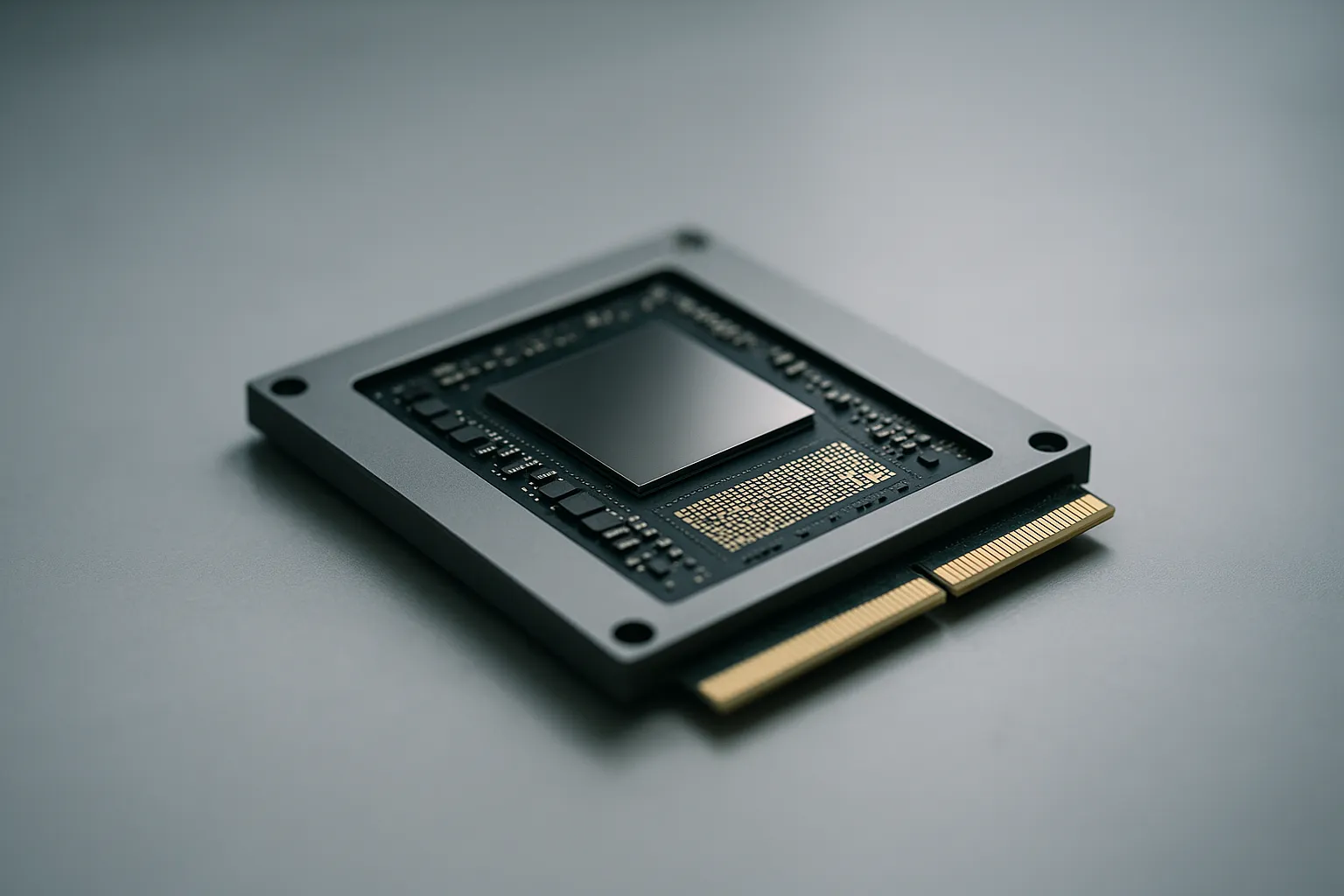
NVIDIA has officially launched RTX Spark, a new GPU offering designed to bring AI inference and agent capabilities directly to consumer Windows PCs without reliance on cloud infrastructure. The announcement positions local compute as a critical differentiator in an increasingly AI-driven software landscape, targeting creators, gamers, and developers who need low-latency AI capabilities. RTX Spark represents NVIDIA's strategic pivot to embed accelerated computing deeper into consumer hardware—a market segment that has historically been dominated by gaming performance metrics. The launch capitalizes on growing demand for on-device AI processing, driven by privacy concerns, latency requirements, and the emergence of AI agent frameworks that benefit from local execution. Unlike previous GeForce RTX offerings optimized primarily for rendering and graphics workloads, RTX Spark explicitly targets machine learning inference, fine-tuning, and agent execution on consumer-grade hardware.
RTX Spark leverages NVIDIA's established CUDA ecosystem to enable developers to build and deploy AI workloads on consumer GPUs with minimal friction. The architecture allows compatible models—including smaller language models, vision transformers, and generative AI applications—to run locally rather than querying cloud APIs. This capability addresses a critical pain point: cloud inference introduces latency, ongoing API costs, and data residency concerns that constrain enterprise and prosumer adoption of AI-native applications. By bundling RTX Spark with GeForce NOW cloud gaming services and DLSS 4.5 technologies, NVIDIA creates a hybrid compute model where users can toggle between local and cloud processing based on workload requirements. Early adoption targets include content creators leveraging AI upscaling and enhancement tools, game developers integrating AI agents into titles, and prosumers experimenting with open-source models like Llama and Mistral without cloud subscription overhead.
The strategic significance of RTX Spark extends beyond product differentiation—it deepens NVIDIA's CUDA lock-in across consumer hardware at a pivotal moment when AMD and Intel are aggressively pursuing generative AI market share. With an estimated 600+ million CUDA-capable GPUs already deployed globally and Windows representing approximately 75 percent of consumer PC operating systems, RTX Spark positions NVIDIA to capture a substantial portion of emerging on-device AI workloads before competitors establish viable alternatives. AMD's ROCm ecosystem and Intel's Arc GPUs lack comparable developer mindshare and software optimization maturity, creating a multi-year advantage for NVIDIA. By making local AI inference accessible and profitable on consumer hardware, NVIDIA simultaneously expands its addressable market beyond data center and gaming segments while reinforcing developer dependency on CUDA—a dynamic that has proven remarkably durable across computing cycles. The move also pre-empts potential regulatory pressure on cloud-centric AI by democratizing inference infrastructure across consumer devices.