
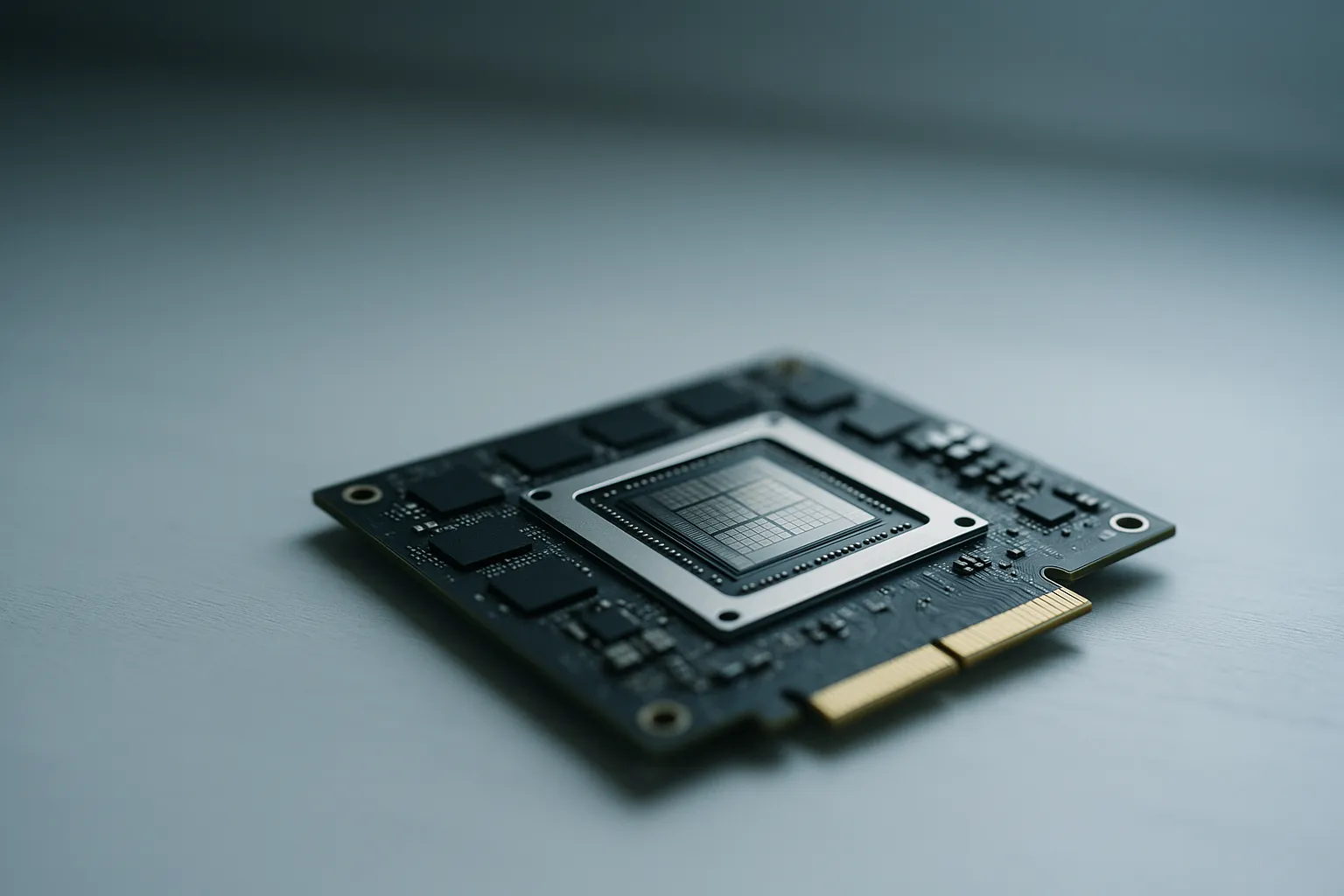
NVIDIA's commanding position in China's AI infrastructure market is fragmenting faster than previously anticipated. According to market analysis tracking China's accelerator deployments, NVIDIA's share of the country's AI chip market has plummeted to 34%, a dramatic contraction from the near-monopolistic levels the company held just 18 months ago. Simultaneously, Huawei has captured 28% market share with its indigenous Ascend processor line, narrowing the competitive gap to just 6 percentage points. This shift represents more than a temporary fluctuation—it signals a structural realignment driven by both geopolitical pressure and genuine technical progress in domestic chip design. The remaining market share is distributed among other players including Cambricon Technologies and smaller vendors, indicating a fragmenting landscape where no single vendor commands the overwhelming leverage NVIDIA previously enjoyed.
The compression of NVIDIA's dominance stems directly from cascading U.S. export controls imposed since late 2022, which progressively restricted sales of advanced GPUs to China. The Biden administration's chip controls initially targeted H100 and A100 processors, then tightened further to block H200 shipments and impose performance thresholds on future architectures. These sanctions forced Chinese enterprises to seek alternatives, accelerating adoption of Huawei's Ascend AI accelerators—particularly the Ascend 910 and newer 910B variants—which deliver competitive performance on transformer-based workloads despite architectural differences from NVIDIA's CUDA-based approach. While NVIDIA's H100 and H200 maintain advantages in certain floating-point operations and established software optimization, Huawei's accelerators have achieved sufficient capability parity for large language model training and inference at scale, backed by Huawei's own MindSpore software framework. Major Chinese cloud providers including Alibaba Cloud, Tencent Cloud, and Baidu have begun diversifying GPU procurement toward Ascend-based systems, both to hedge against supply disruption and to support domestic chip ecosystem development.
However, this market shift carries significant caveats about long-term viability. Huawei's 28% share, while substantial, remains dependent on government purchasing mandates and state-directed cloud infrastructure investments rather than organic market competition. The company faces genuine technical challenges maintaining compatibility with globally-developed AI frameworks optimized for CUDA, including PyTorch and TensorFlow, which imposes integration burdens on developers. NVIDIA retains structural advantages through CUDA ecosystem maturity, developer familiarity, and the absence of geopolitical risk in most non-Chinese markets. Rather than representing a permanent rebalancing, this narrowing gap may instead reflect a bifurcated market: China developing a self-sufficient GPU ecosystem insulated from U.S. controls, while NVIDIA consolidates dominance elsewhere. The 6-point margin suggests neither vendor has achieved decisively superior technology—only that regulatory fragmentation is fragmenting the previously unified global AI infrastructure market.