
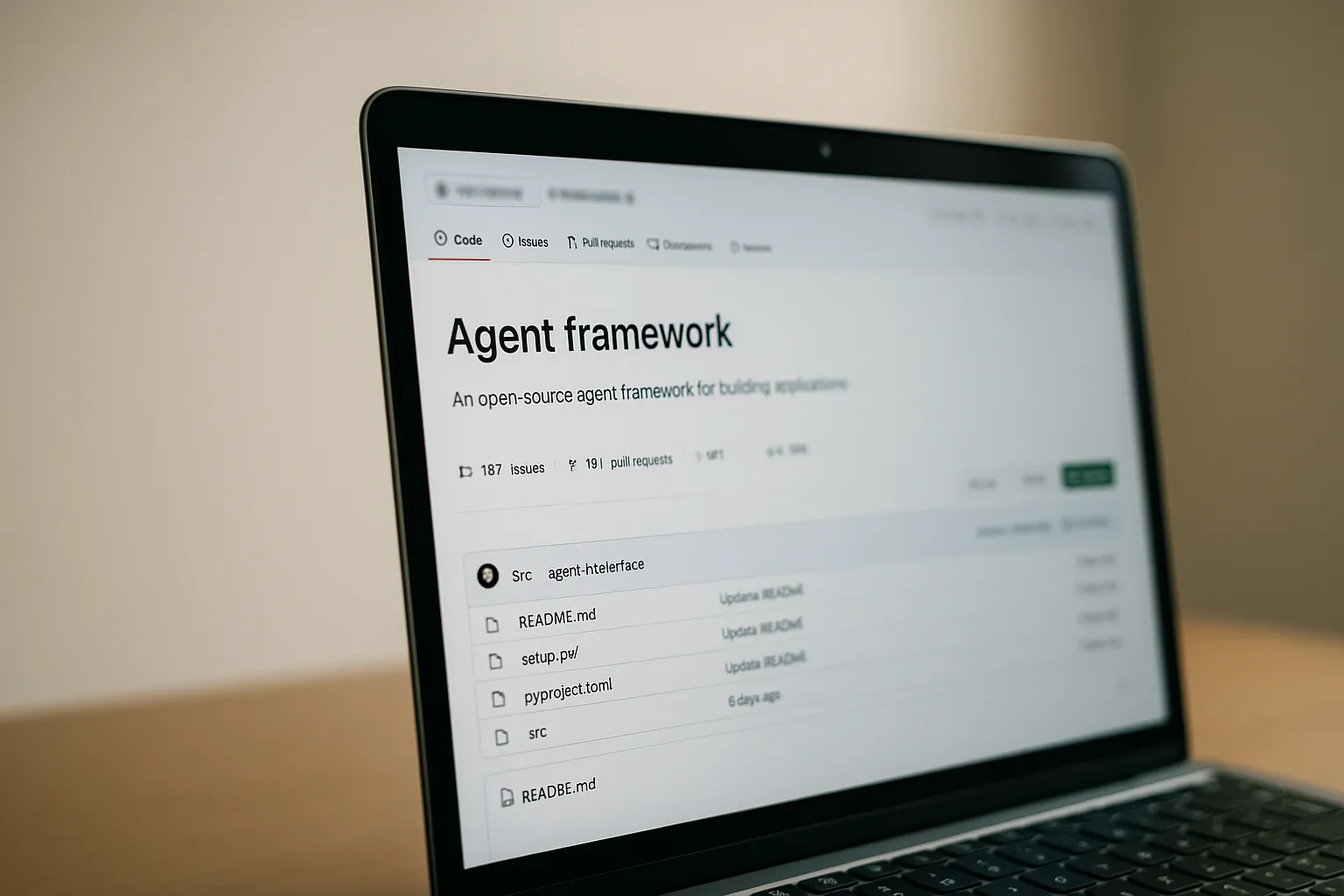
The speed at which new agent-focused projects are gaining developer mindshare suggests a market correction is underway. Talorys, a personal AI agent deployable to Cloudflare Workers, hit 487 stars in its first day on GitHub—a velocity typically reserved for frameworks addressing acute pain points. The project strips away cloud dependencies and telemetry concerns, offering a self-hosted, free-tier alternative that deploys with a single npm command. This spike indicates developers are actively searching for agent infrastructure they can own and deploy without architectural lock-in, a sharp departure from the SaaS-first positioning that dominated the LLM wave of 2023-2024.
Mature projects are simultaneously cementing their positions. Dify, a year-old agentic workflow platform with 158,108 stars, now emphasizes production transitions rather than experimentation—teams can prototype agent pipelines and RAG systems on Dify's collaborative workspace, then deploy to their own VPC or infrastructure without rebuilding tooling. Herald-OS, a newer entrant launched four days before this reporting, takes a different angle: an agent-native desktop operating system where autonomous agents become first-class citizens rather than chatbot interfaces. UpTrain (YC W23) solves an adjacent but critical problem—evaluation and quality assurance for agentic outputs—addressing the persistent gap between prototype reliability and production requirements that plagued early LLM deployments.
What distinguishes this wave from earlier AI infrastructure booms is modularity by intent. These projects target different layers: execution environments (Talorys, Herald-OS), workflow orchestration (Dify), and observability (UpTrain). Rather than converging on a single abstraction, developers appear to be building specialized tools for specific agent deployment contexts. The fragmentation suggests the market is moving beyond "do you use agents?" toward "which agent infrastructure fits your deployment model?" This shift from vendor consolidation to layered, composable tooling typically precedes mainstream adoption—teams need confidence they won't rebuild when priorities change. For projects shipping agent infrastructure, the window to establish community moats is narrow but real.