
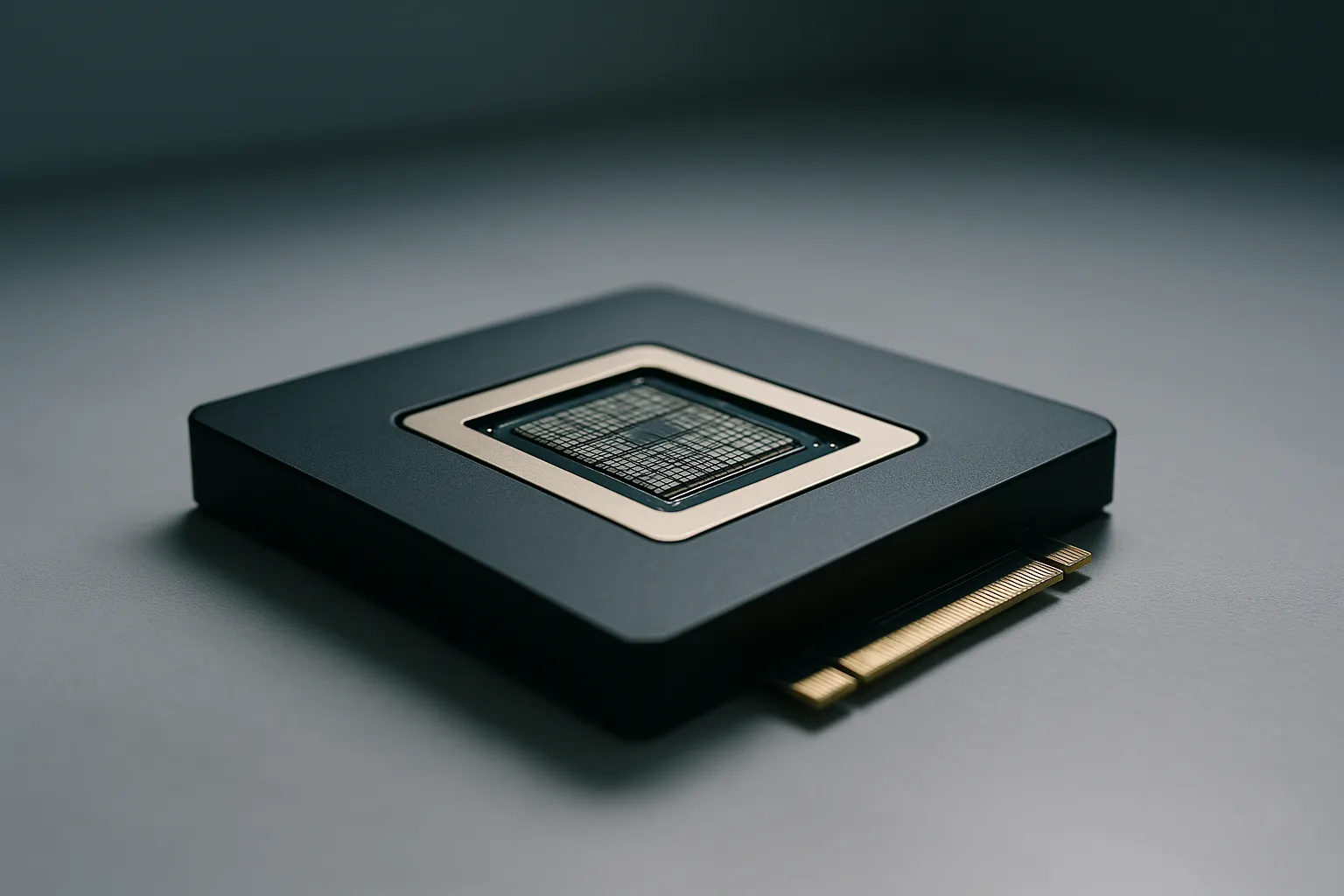
NVIDIA has reportedly discontinued GeForce RTX 5090 production to redirect manufacturing capacity toward data center and professional-grade GPUs, marking a significant strategic realignment in the company's portfolio. The decision reflects NVIDIA's conviction that AI infrastructure buildout remains the dominant market opportunity, with enterprise demand for compute resources substantially outpacing consumer gaming applications. This production shift signals that NVIDIA views specialized AI accelerators and data center GPUs as more strategically valuable than high-end consumer hardware, even as the RTX 5090 commands premium pricing in the gaming sector.
The move carries immediate implications for the consumer GPU market. Supply constraints on the RTX 5090 are expected to drive prices upward, while the RTX 5080 24GB may assume the role of gaming flagship in NVIDIA's consumer lineup. However, the broader significance lies in NVIDIA's capital allocation strategy—by concentrating production on data center and professional GPUs, the company is betting that AI infrastructure investments will generate substantially higher returns than the consumer gaming segment, despite the latter's established market presence.
This production reallocation aligns with industry analysis suggesting that AI infrastructure investments have been severely underestimated by the market. SemiAnalysis research indicates that real returns from AI compute infrastructure extend far beyond token-generation efficiency, encompassing autonomous networks, enterprise AI customization, and critical workload optimization across telecommunications and healthcare sectors. NVIDIA's manufacturing decision essentially places capital behind this thesis, effectively doubling down on enterprise GPU demand as the primary driver of future revenue growth and strategic importance.