
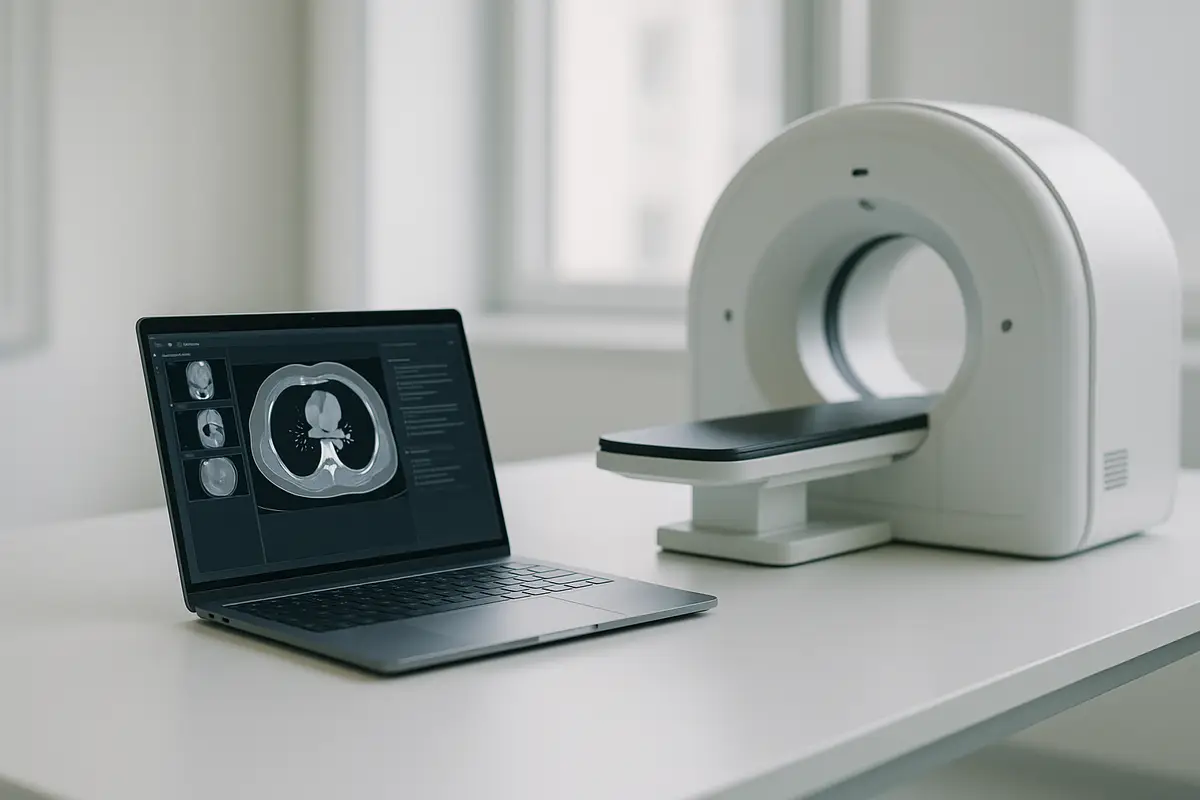
A radiotherapist today faces a fragmented technological landscape. She receives a patient's CT scan and must manually route it through a tumor segmentation AI tool. When that completes, she copies the results into a separate dose-planning system. Later, outcome prediction models operate in isolation, unable to incorporate real-time clinical context. None of these specialized AI systems communicate seamlessly—each operates in its own software silo, requiring clinicians to manually translate outputs into inputs for the next stage. This friction consumes time, introduces transcription errors, and prevents the AI ecosystem from functioning as an integrated care system. RadOnc-Agent, presented in a new arXiv preprint, proposes a solution: positioning a large language model as an orchestration layer that manages these handoffs intelligently across the entire radiotherapy pathway.
The framework, developed as a research prototype, works by having the LLM ingest imaging data and clinical context, then autonomously route information to specialized models in sequence while reformatting outputs to match downstream requirements. For example, the LLM ingests a patient's CT scan and relevant history, dispatches it to a segmentation model for tumor delineation, receives structured output, automatically reformats that data for a dose-planning algorithm, then monitors for inconsistencies between predicted and actual outcomes. The system flags contradictions that might indicate data quality issues or clinical complications, alerting radiotherapists to review results before proceeding. This end-to-end coordination eliminates manual data translation while creating an audit trail of all model decisions. The research demonstrates that LLM-based orchestration can unify workflows that span multiple clinical software environments and data modalities—a longstanding integration challenge in healthcare AI.
The significance extends beyond convenience. Fragmented AI systems force clinicians to validate each model output independently, multiplying cognitive load and verification time. By centralizing coordination through the LLM, RadOnc-Agent reduces these friction points while maintaining human oversight at critical junctures. The work represents a broader shift in healthcare AI: moving beyond isolated task-specific models toward integrated AI workflows that reflect how clinicians actually work. While the research remains experimental and performance metrics on real clinical outcomes are not yet published, the architectural approach addresses a genuine pain point affecting radiotherapy adoption of AI tools. As more specialized medical AI models enter clinical practice, orchestration layers like this may become essential infrastructure for realizing the full potential of artificial intelligence in cancer care.