
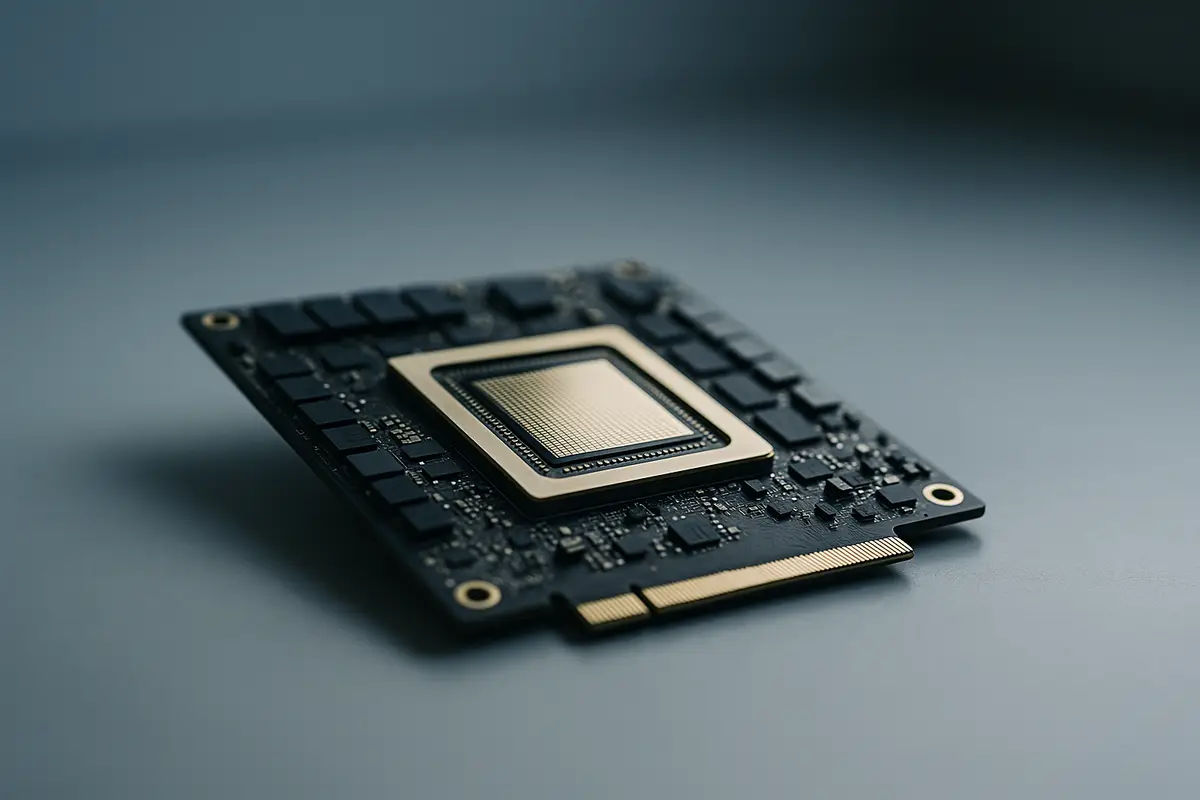
NVIDIA's Blackwell GPU architecture is delivering measurable performance improvements in production AI inference workloads, with OpenAI's new GPT-6 Astra Ultrafast model achieving up to 8x faster processing speeds compared to prior generation performance baselines. The model is now available through the OpenAI API and to ChatGPT Work and Codex users, marking a shift in how leading AI providers are optimizing inference efficiency. Blackwell's architecture introduces specialized tensor cores and memory bandwidth enhancements specifically designed to accelerate transformer model inference—a workload where latency reductions directly translate to improved user experience and reduced computational overhead for data center operators.
The significance of this development extends beyond raw speed metrics. Inference optimization has become a critical focus for cloud AI providers facing escalating data center costs and energy consumption concerns. By achieving substantial performance gains on existing models without requiring architectural changes to applications, Blackwell enables operators to serve more inference requests per GPU, improving return on investment in expensive compute hardware. This efficiency gain is particularly important for enterprises running production AI systems where inference workloads far exceed training workloads in volume—a ratio that typically exceeds 90:10 in mature AI deployments.
The Blackwell inference results arrive as major cloud providers and AI labs compete on inference speed and cost. NVIDIA's ability to deliver architecture-level optimizations that achieve meaningful speedups in real-world models like GPT-6 Astra reinforces its position as the dominant supplier of AI compute infrastructure. As inference becomes the primary workload for deployed AI systems, the company's focus on optimizing this segment rather than just training performance suggests a maturation of NVIDIA's approach to the full AI compute stack.