
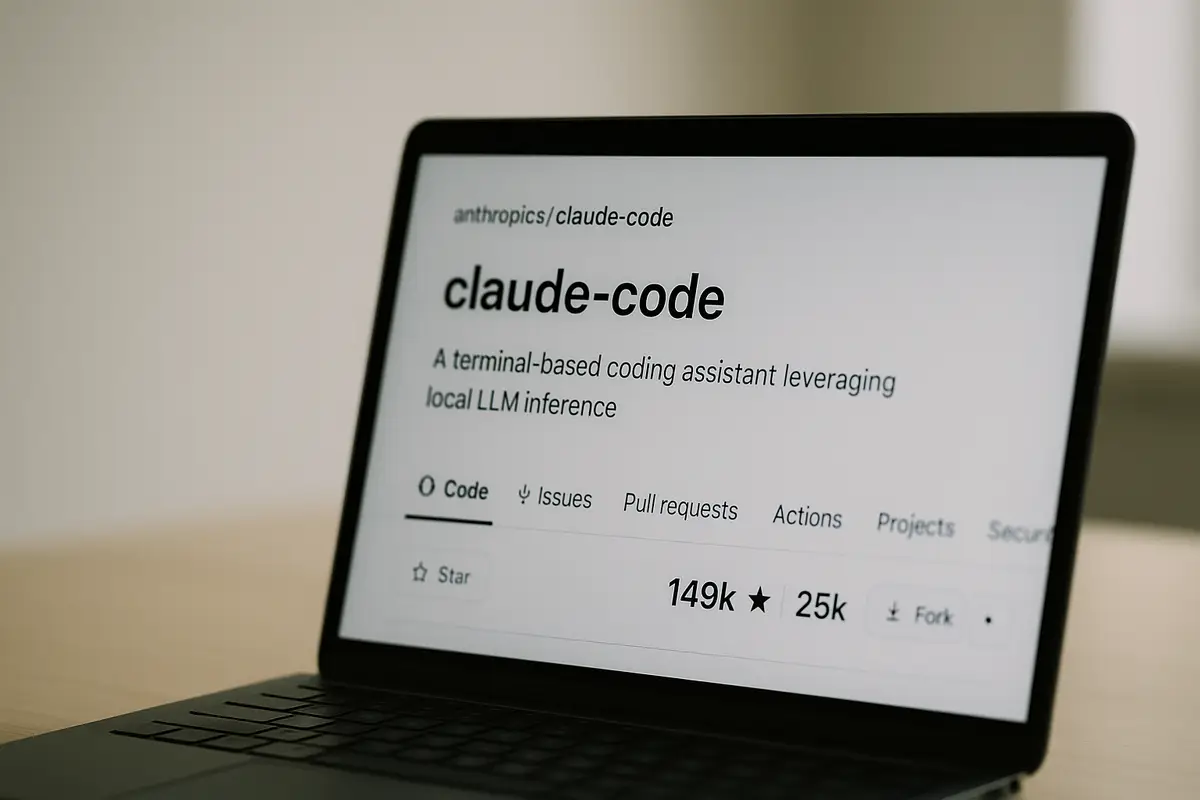
Claude Code, an open-source agentic coding tool that operates as a terminal interface, has emerged as one of GitHub's fastest-growing developer utilities, accumulating 149,344 stars with a daily gain velocity of 336 stars as of late February 2025. The TypeScript-based framework enables developers to interact with their codebases through natural language commands, automating routine refactoring, code explanation, and git workflows without leaving the terminal. At this pace—outstripping many of GitHub's top utility repositories—Claude Code represents a measurable inflection point in how developers are choosing to integrate AI into their workflows: locally, openly, and with full codebase access rather than through cloud-dependent APIs.
The momentum reflects a broader migration within the open-source AI ecosystem away from proprietary SaaS coding assistants toward self-hosted alternatives. Parallel trends underscore this pattern: production-grade agentic RAG (Retrieval-Augmented Generation) frameworks are gaining similar traction, with repositories like jamwithai/production-agentic-rag-course accumulating over 9,400 stars and becoming de facto standards for enterprises building retrieval systems. Developers cite two primary advantages: cost predictability (eliminating per-token or per-request pricing) and data sovereignty (code remains on-premise or privately managed infrastructure). However, open-source coding agents still face material gaps—latency on complex refactoring tasks remains higher than commercial offerings, and accuracy on nuanced architectural decisions remains inconsistent across model sizes under 70 billion parameters.
The uptake also signals a philosophical recalibration in how developers view AI tooling post-2024. Rather than replacing their workflows, they're embedding AI as a local, controllable layer within existing development practices. Claude Code's architecture—understanding full codebase context and executing actions through natural language—mirrors the agentic pattern now dominating production RAG deployments, suggesting that autonomy, not just prediction, has become table stakes for developer-facing open-source AI. This shift matters: it decouples innovation in coding assistance from any single vendor's API availability or pricing changes, effectively democratizing access to sophisticated code-understanding models across teams of all sizes.