
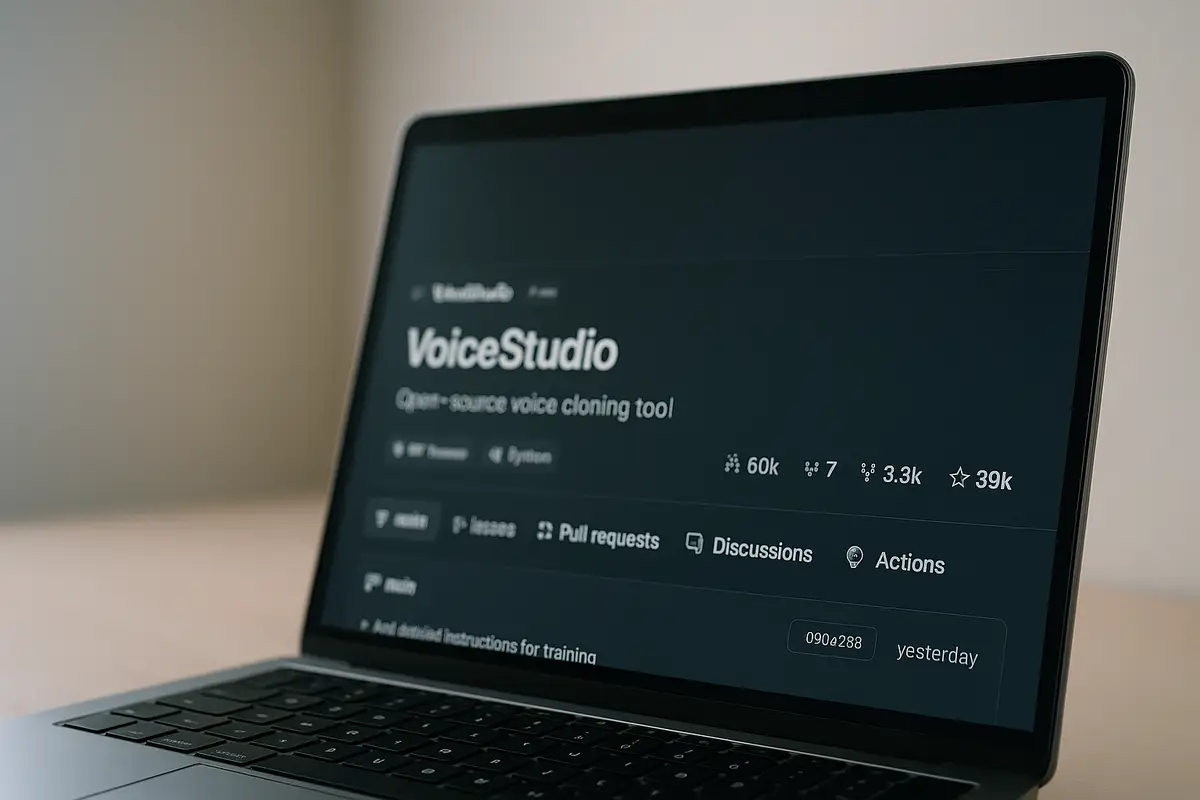
VoiceStudio, a fully local voice synthesis and cloning platform, surged to 39,216 GitHub stars with a single-day gain of 3,060—among the strongest momentum in the open-source voice AI space. The Python-based project, licensed under AGPL-3.0 and backed by HuggingFace model integrations, targets the specific use cases where ElevenLabs commands premium pricing: voice cloning, video dubbing, transcription, and audiobook generation across 646 languages. Unlike browser-based wrappers or toy demos, VoiceStudio targets real production workflows, with CUDA acceleration and MLX support for efficient inference on consumer hardware. The sustained star velocity suggests the project is crossing from hobbyist interest into adoption by content creators and developers seeking to avoid vendor lock-in and per-API-call billing.
The technical implementation reveals why timing matters. VoiceStudio leverages pre-trained models from HuggingFace—likely including speaker embedding and vocoder architectures—allowing users to clone voices from short audio clips and generate new speech without touching commercial endpoints. The AGPL-3.0 license creates a key business constraint: any SaaS wrapper built on VoiceStudio must open-source modifications, pushing viable commercialization toward self-hosted enterprise deployments or hybrid models where users retain data sovereignty. This differs sharply from permissive open-source licenses that enable closed commercial products, making licensing choice a strategic lever in the open voice AI market.
Real-world viability still depends on quality benchmarks rarely disclosed in GitHub repos. ElevenLabs' appeal rests partly on latency (sub-500ms generation) and voice naturalness tuned for streaming. VoiceStudio's actual performance—inference speed on mid-range GPUs, clone fidelity from minimal speaker data, multilingual accent consistency—remains largely community-tested rather than formally published. For local-first workflows with non-time-critical demands (batch audiobook generation, offline dubbing), the tradeoff favors VoiceStudio; real-time interactive voice applications may still require commercial tooling. The project's explosive growth signals developer appetite for open infrastructure, though sustainable adoption hinges on closing the quality and performance gap through continued engineering rather than GitHub momentum alone.