
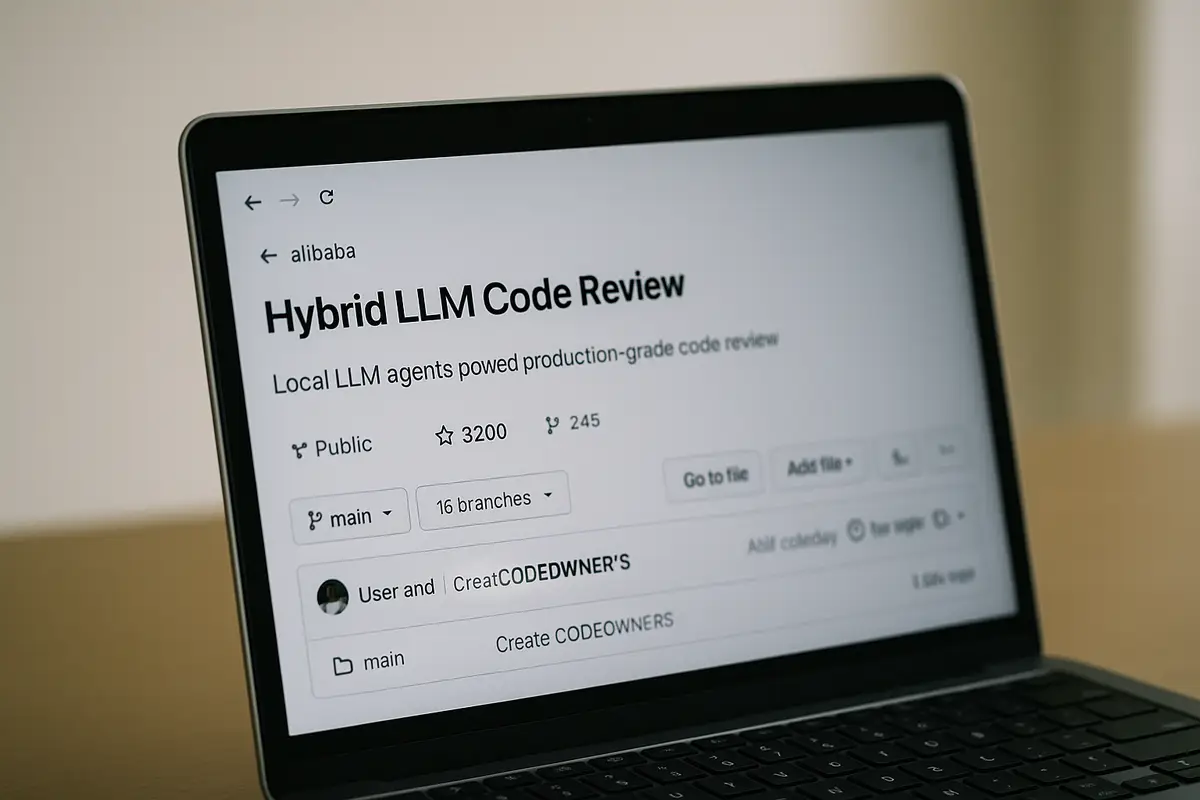
Alibaba's open-code-review project surged to over 3,200 GitHub stars overnight, signaling strong developer interest in locally-deployable, LLM-powered code review systems. The tool uses a hybrid architecture that pairs deterministic rule-based pipelines with LLM agents to generate precise, line-level code comments. Critically, it supports both OpenAI and Anthropic APIs, but also works with self-hosted models, making it viable for organizations requiring on-premise AI infrastructure. This approach avoids outsourcing sensitive code to third-party AI vendors while maintaining the nuanced analysis that pure rule-based systems cannot deliver.
The technical implementation reflects maturing practices in the open-source AI ecosystem. Rather than relying entirely on LLM inference, the tool grounds analysis in domain-specific security and correctness rules—detecting NPE vulnerabilities, thread-safety issues, XSS attacks, and SQL injection patterns. The multilingual ruleset covers multiple programming languages out of the box, addressing a real production need. By combining deterministic checking with LLM-based reasoning, the system reduces hallucinations and false positives while remaining cost-effective for teams running frequent, large-scale reviews.
This development illustrates a broader shift toward practical, self-hosted AI tooling. As local LLM frameworks like Ollama and llama.cpp mature, developers are embedding language models into specialized workflows previously locked behind SaaS offerings. Open-code-review's rapid adoption suggests enterprises are actively searching for alternatives to cloud-dependent code analysis. The project's focus on compatibility—supporting multiple AI providers and local models—positions it as infrastructure for organizations building AI-augmented development pipelines they can control and audit themselves.