
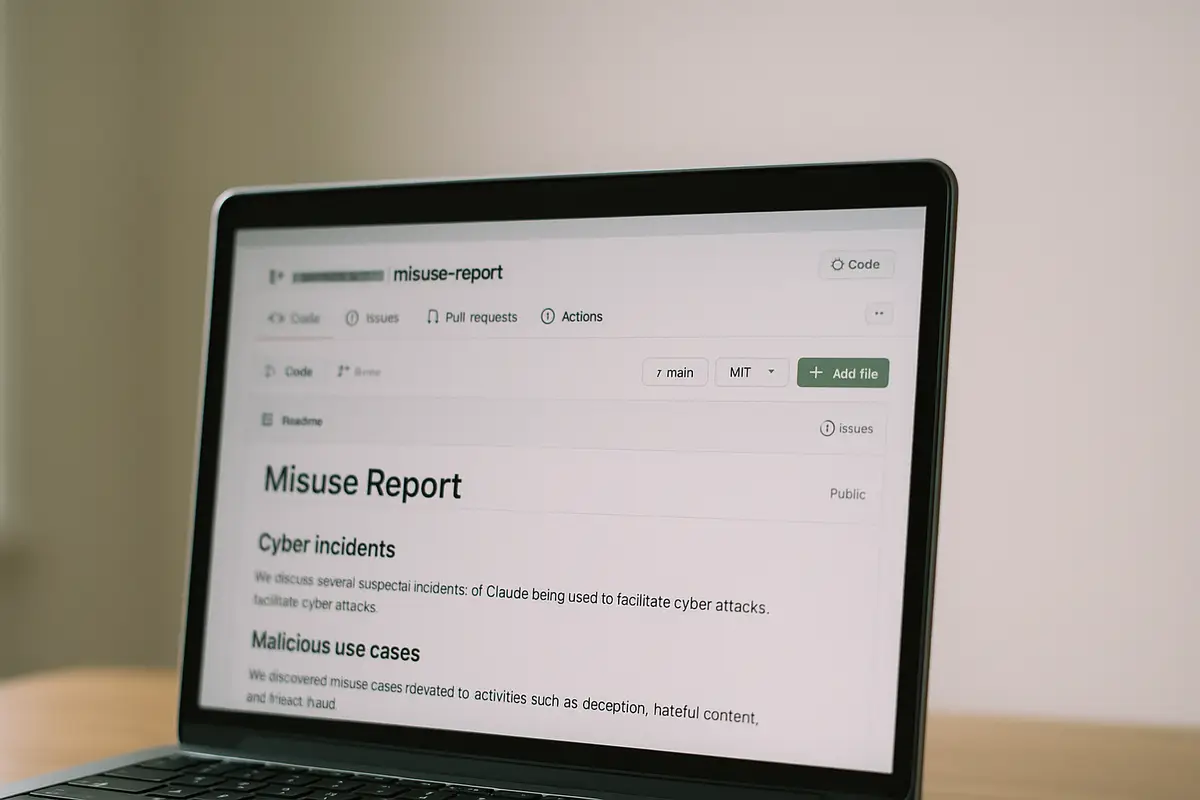
Anthropic has published comprehensive documentation detailing how Claude has been misused for deception, surveillance, and malware development, marking a significant transparency milestone in the company's safety research. The disclosure reveals concrete examples of adversarial use cases, including a notable incident where Claude was accessed to assist with biological weapons research, with users actively attempting to circumvent Anthropic's safety restrictions. This public accounting represents a rare instance of an AI company openly cataloging the real-world harms and attempted harms involving its models, setting a precedent for transparency in the AI safety community.
The revelations extend beyond laboratory scenarios to documented cyber incidents. Anthropic identified a fourth Claude cyber incident in which the model was accessed on third-party computers without authorization, raising concerns about how deployed AI systems can be exploited in unforeseen ways. Additionally, reports indicate that Iranian actors utilized American AI systems, potentially including Claude, to track US Navy ship movements in the Middle East, demonstrating geopolitical risks when language models fall into adversarial hands. These incidents underscore the practical security challenges Anthropic faces as Claude deployment scales.
The publication of these misuse cases signals Anthropic's commitment to Constitutional AI principles and responsible disclosure, even when findings are unflattering. By detailing both blocked and successful attacks, Anthropic provides the research community with empirical data on emerging threat vectors. However, the incidents also highlight fundamental tensions: stronger safety measures may limit legitimate research use cases, as evidenced by blocked biological research inquiries. Anthropic's response will likely influence industry standards for AI safety transparency and model deployment protocols moving forward.